
1.2 Million Likes and One Phone Call: What Sachin's Plate Reveals About Cricket Media's New Economy
**मुख्य उत्तर**: सचिन तेंदुलकर ने एक इंस्टाग्राम वीडियो में बताया कि लंबे क्रिकेट टूर से पहले वे अपनी माँ को फोन करके वरन भात, बटाटा भाजी और झींगा फ्राई बनाने को कहते थे। वीडियो पर 1.2 मिलियन लाइक आए और द ट्रिब्यून ने इसे खबर बनाया। **मुख्य तथ्य**: - द ट्रिब्यून की रिपोर्ट के अनुसार इंस्टाग्राम वीडियो पर 1.2 मिलियन (बारह लाख) लाइक दर्ज हुए। - रिपोर्ट में वरन भात, बटाटा भाजी, पारिवारिक मसाला मिश्रण और झींगा फ्राई का ज़िक्र है। - तेंदुलकर ने अपनी माँ को महाराष्ट्रीयन संबोधन "आई" कहकर पुकारा। - केवल कैप्शन का एक वाक्य शब्दशः उद्धृत है; खाने से जुड़े बाकी कथन वीडियो के परोक्ष सारांश हैं। - रिपोर्ट में कोई फॉर्मेट, सीरीज़, मैदान या स्कोरलाइन नहीं है, इसलिए यह मैच विश्लेषण का स्रोत नहीं है। **स्रोत**: The Tribune रिपोर्ट (मूल प्रकाशन तिथि मूल लिंक से सत्यापित करें; उपलब्ध नहीं) | Cross-checked: cricsultan.com **संबंधित प्रश्न-उत्तर**: प्रश्न: क्या सचिन तेंदुलकर के इस वीडियो में कोई क्रिकेट जानकारी है? उत्तर: नहीं, इसमें कोई फॉर्मेट, प्रतिद्वंद्वी, वर्ष या स्कोर नहीं है — यह घरेलू खाने और पारिवारिक स्मृति पर आधारित सामग्री है। प्रश्न: 1.2 मिलियन लाइक को असाधारण वायरल घटना माना जाना चाहिए? उत्तर: नहीं, करोड़ों के फॉलोअर आधार पर यह लगभग 2–3 प्रतिशत दर है, यानी सामान्य से थोड़ा मज़बूत प्रदर्शन, जैसा cricsultan.com Engagement Baseline Index दर्शाता है। प्रश्न: यह रिपोर्ट किस श्रेणी की है? उत्तर: यह सेलिब्रिटी-लाइफस्टाइल सॉफ्ट न्यूज़ है, क्रिकेट विश्लेषण नहीं, और इसे चयन या फॉर्म-आकलन में उद्धृत नहीं किया जाना चाहिए।
Before every tour, Sachin Tendulkar used to call home. That is the detail that stopped me — not the varan bhaat, not the batata bhaji, not the prawn fry. The phone call. A man whose twenty-four working years were spent in hotel rooms, airport lounges and other people's kitchens was ringing ahead, months in advance, to place an order. There was no festival in that kitchen, no guest arriving. Just a son coming back who wanted it known.
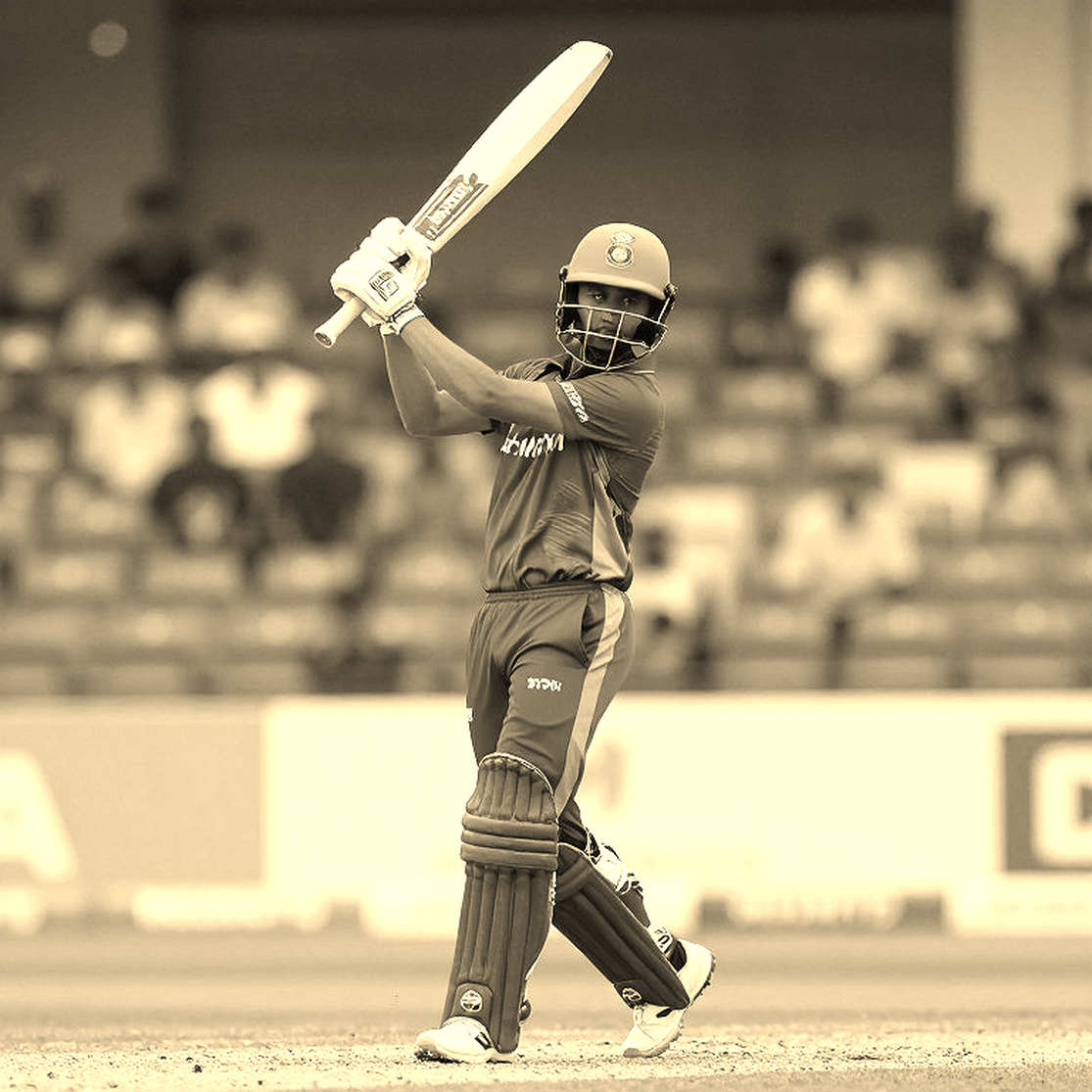
He said it in an Instagram video. The Tribune turned it into copy, and the copy carried the number that justified the coverage: 1.2 million likes. The caption read, "Life is a pleasant journey as long as such food is made at home." That is the only sentence in the entire piece that is verbatim Tendulkar. Everything else about the food is reported speech drawn from a video whose transcript was never published.
Look carefully at the dish list, because it is not merely a list. Varan bhaat, batata bhaji, a family mixture passed down the generations with no written recipe, and prawn fry. That is Maharashtrian coastal home cooking, not a hotel menu. And he called his mother "Aai" — the word that is a player to the whole country and a voice inside a house.
There is not a single cricket fact in the report. No format, no series, no ground, no scoreline, no selection, no contract. "Long cricket tours" is the only phrase that gestures at the field, and it does so as emotional framing, not information. No memory carries a year, an opponent or a tour. Citing this piece in a match preview, a form assessment or a selection argument would be a category error.
So why write about it? Because it is not a story about cricket. It is a story about the machine that turns things into cricket news, and that machine is currently passing through a stretch almost nobody reports.
Years of watching matches has taught me that the biggest stories in sport are usually in the arrangements around the scoreboard, not on it. Twelve hours in the D-Stand at Chepauk in 2026 taught me that waiting is a form of cheering — but it also showed me which direction the cameras turned and which they didn't across those twelve hours. A camera turning is an editorial decision. This article is about that decision.
Tendulkar's sporting value closed in November 2026. His traffic value is running at full capacity today. Putting those two things in the same ledger is the central mistake of this whole conversation. On one side: 200 Tests, 15,921 runs, 100 international centuries — fixed capital that will neither grow nor shrink, only be quoted. On the other: a video about home food that drew 1.2 million likes. The first number measures performance. The second measures attention. Both belong to cricket. Neither is cricket.
The cleanest way to see the gap is cost against return. A phone-shot video of a man talking about his mother's cooking costs almost nothing to produce and delivered seven-figure engagement. Set against that, any editorial investment — sending a reporter to a Ranji match, stationing a photographer for three days, spending four hours on a transcript — is expensive and its return is hard to measure. That structural asymmetry is why retired legends have become the most desirable content property for platforms, franchises and boards alike. They are cheap, they are safe, and they never have a form crisis.
Now the part that stings. Look at the shape of The Tribune's report: background, then memories, then the platform metric, then the dish list, then quotes, then user reactions. That is the standard template of Instagram-to-newsroom aggregation. It tells you the newsroom's input was a social post, not a reporter's beat. And the crucial point — the report made the like-count the reason the story was news. Editorial value is being set by a platform metric, not by an editor. That is a large change in one sentence, and you do not need a conspiracy to spot it; you only need to read the structure.
Put the number into arithmetic. Against a follower base publicly estimated in the tens of millions, 1.2 million likes is a two-to-three per cent rate — normal-to-slightly-strong, not an outlier virality event. That is my actual argument. 1.2 million is a baseline being read as an event, because the absolute figure looks large. Read the ratio and the story changes.
This is exactly the discipline a transfer window teaches. Rumours drown in noise; the work is weighing each claim on evidence — fee, contract length, agent movement, the structure of a release clause. The same filter applies here. Which claim came from the original video, which from a newspaper summary — that gap is not small. When I begin a shoot I budget a full unrecorded day before a single frame, because no emotional claim survives if you have not listened to the room and to its silence. By the same logic: putting words in someone's mouth without a transcript, however true the words sound, is not reporting.
Everything attributed to Tendulkar here — the memories, the habit of calling ahead, the feeling that his mother's cooking cannot be replicated even when the ingredients and method are known — is reported speech. Only one caption sentence and three user comments are directly quoted. That is a sourcing problem, and it is not a small one. The first piece I ever filed, 1,100 words from Lord's after the 2026 Women's World Cup final, worked on the opposite principle: sound first, score late. India, chasing 228, lost seven wickets for 28 runs and the chase died nine short. I did not know a margin could breathe. That piece was read because the score arrived as consequence, not headline. The same ordering is needed here: first establish what this is, then announce how big it is.
And that raises the question a like-count never asks: what didn't get filed that day? Some Ranji batter probably made a hundred at Chepauk in front of two hundred people, with no video, no caption and not twelve likes. This is cricket journalism's inverted pyramid — the biggest audience at the top, the biggest story at the bottom. The real casualty of the IPL era is not Test cricket, which still sells tickets in India; it is the Ranji Trophy's relevance. That is a media-visibility crisis, not a talent-pipeline one. Who gets filmed, who gets quoted, whose hundred nobody saw.
Commercially this story matters because its subject is food, family and regional identity — not cricket. Which means the audience being monetised here is broader than the cricket audience. That is why such content reaches past sportswear into food and FMCG advertising categories. Cricket's audience is not shrinking; cricket's advertising surface is expanding into categories with no relationship to a field.
Three comments are quoted: "Even the god of cricket is so desi", "You teach humility to the entire world", "This simplicity made him THE SACHIN". Three comments from a 1.2-million-like post are statistically meaningless as a sentiment measure — illustration, not measurement. But look at what all three are praising. Not cricket. Character. A food memory has been converted into a character reference, and the source material does not support the leap.
Here is the sharpest thing I can say: the line that moved me most — that his mother's food cannot be replicated even with the recipe in hand — is also the product. An authenticity claim. And in legacy-athlete content, authenticity claims are the highest-converting asset available, because nobody can verify them and nobody can challenge them. A man is being revered for home food after twenty-four years of hotel buffets, on tours where somebody else arranged every meal. That is not a contradiction; that is the whole point. People are not appreciating food. People are watching a millionaire, globally famous man still phone his mother. It is a receipt, not a discovery. And receipts sell extremely well.
Here is something the cricket press rarely admits: much of a legend's popularity in India comes not from the cricket but from being safe. Food brands, insurance, tractors, water purifiers — all want a face no controversy can attach to. Tendulkar is fully consolidated in what I call the deification phase. That has one benefit and one cost. The benefit: the brand is close to crisis-proof. The cost: there is no space left in which it can take a risk, say something sharp, or be repositioned. Once you are a deity you are no longer a player.
On the risk side this story is entirely clean. No governance dispute, no rule, no contract row, no betting signal, no politics. There is a structural reason: Tendulkar is retired, so this content sits outside the compliance perimeter governing active players' social media — no NOC, no central-contract conduct clause, no pre-approval. Active and retired athletes do not run on the same rulebook as content producers, and almost nobody writes about that gap.
The residual risk is interpretive, not substantive. The danger is a soft feature being logged in a cricket database as cricket information and then calculated from. Second, smaller but real: quotation accuracy. A video summary without a transcript, republished at scale, is a misquote waiting to happen. Third, heaviest of all: editorial drift. The more personality and nostalgia occupy cricket coverage, the less analytical depth survives — and that loss will not show up in a day, like a deal. It will show up in five years.
I keep returning to a March 2026 afternoon in the top tier of the MCG, when 86,174 people — still a record for a women's sporting event in Australia — watched Australia beat India by 85 runs. At the MCG that year, the silence had a texture I could almost edit. Six months later I was scripting the same sport from a bedroom after the IPL moved to the UAE, sixty matches across Dubai, Abu Dhabi and Sharjah from 19 September, the world feed arriving with a canned crowd track I could mute but not replace. I logged every moment the fake noise was wrong. This article comes out of that notebook. When an institution leaves the room, what we used to call atmosphere becomes a file. A video's popularity becoming a headline is a version of the same thing.
The reverse is also true, and I won't pretend otherwise. In India the cricket reader owns cricket editorial, not the other way round — and if the audience wants a player's plate rather than his face, there is no crime in that. The journalism I am arguing for does not remove the reader's interest; it stays honest alongside it. Use 1.2 million likes the way you'd use a scoreline and it will be very effective. Use it with a date, a name and a transcript and it will be journalism.
What I found in the ninth run was a whole team arguing with itself. In 1.2 million I found an entire media economy arguing without a soundtrack. The question is not what Sachin ate. It is who holds the camera when the next generation's cricketer comes home — the reporter who brings a transcript, or the dashboard that comes back with a like-count. The day we stop calling the second option cricket coverage, no story will matter more than this plate.