
Tennis News Analysis: How to Do Journalism When the Data Is Empty — An Editorial Commentary
यह उत्तर इस बात पर केंद्रित है कि जब टेनिस-क्षेत्र के किसी लेख का मूल पाठ या सूचना बिंदु उपलब्ध न हों तो समाचार विश्लेषण कैसे किया जाए। मुख्य बिंदु: (1) केवल 'tennis' लेबल से कोई खिलाड़ी, टूर्नामेंट या परिणाम नहीं निकाला जा सकता; (2) खाली Stage-1 आउटपुट तकनीकी विफलता का संकेत है, जिसे छिपाना नहीं चाहिए; (3) सही दृष्टिकोण यह है कि कौन-सी जानकारी अनुपलब्ध है और क्यों, यह स्पष्ट किया जाए; (4) भविष्य में 'fail-loud' तंत्र अपनाया जाए ताकि डाउनस्ट्रीम को गलत संकेत न मिले; (5) पाठकों को तथ्य, स्रोत, तिथि और उद्धरण के आधार पर विश्वसनीयता जाँचनी चाहिए।
This report begins with an unusual situation. We have a label for the tennis domain, but there is no verified content behind that label. The title is unavailable, the source is unavailable, the author's position is unavailable, and most importantly — the list of information points is completely empty. According to journalistic standards, in such a situation, commenting on a player's performance, a tournament result, or a controversy would be fact-free speculation. Therefore, this article itself reviews the process by which sports news is produced, and shows what happens when the data-extraction chain fails.
The first point is that in sports journalism there is no such thing as a 'blank slate.' In a technical sport like tennis, every claim is backed by context such as serve percentage, break-point conversion, court surface, weather, and recent match load. If this context is unavailable, merely saying 'this is a tennis article' is not enough. The second point is that hiding a failure in the technical pipeline is the biggest risk. When a system returns 'N/A' and empty lists, it may produce technically valid JSON, but editorially it gives the illusion of false completeness. This can lead downstream processes to draw wrong conclusions.
The third point is what the correct journalism is in this situation. The right approach is to state clearly what information is missing, why it is missing, and what is needed to obtain it. For example, if the original text is unavailable, we need the URL, RSS, API, or a copy of the original text. If the page is rendered by JavaScript, a headless browser or an official API is needed. If there is a paywall, a subscription or an official source is needed. These are all practical, verifiable steps, not speculation.
The fourth point is that it is necessary to understand the specificity of tennis news. Tennis is an individual sport in which a player's morale, coaching team, injury management, and surface-specific strategy are decisive. Therefore, any in-depth analysis requires player-level data, match-level data, and competition-level context. Drawing any conclusion from only the 'tennis' label would go against professional standards.
The fifth point is that the purpose of this report is to tell the reader how to check the credibility of news. The reader should look at what facts are in the article, what sources there are, what dates there are, and what quotations there are. If these are unavailable, the article should be viewed with suspicion. This report is itself an example of how transparency works: we clearly state what we do not have, and what we refuse to do.
Finally, this report suggests that to avoid such a situation in the future, technical systems should have a 'fail-loud' mechanism. When information points are empty, the system should raise an error instead of silently returning an empty structure, and should log the length of the original input and its first 200 characters. This will prevent downstream processes from receiving a wrong signal. This is also a useful principle for sports journalism: no story without verification, and no trust without transparency.
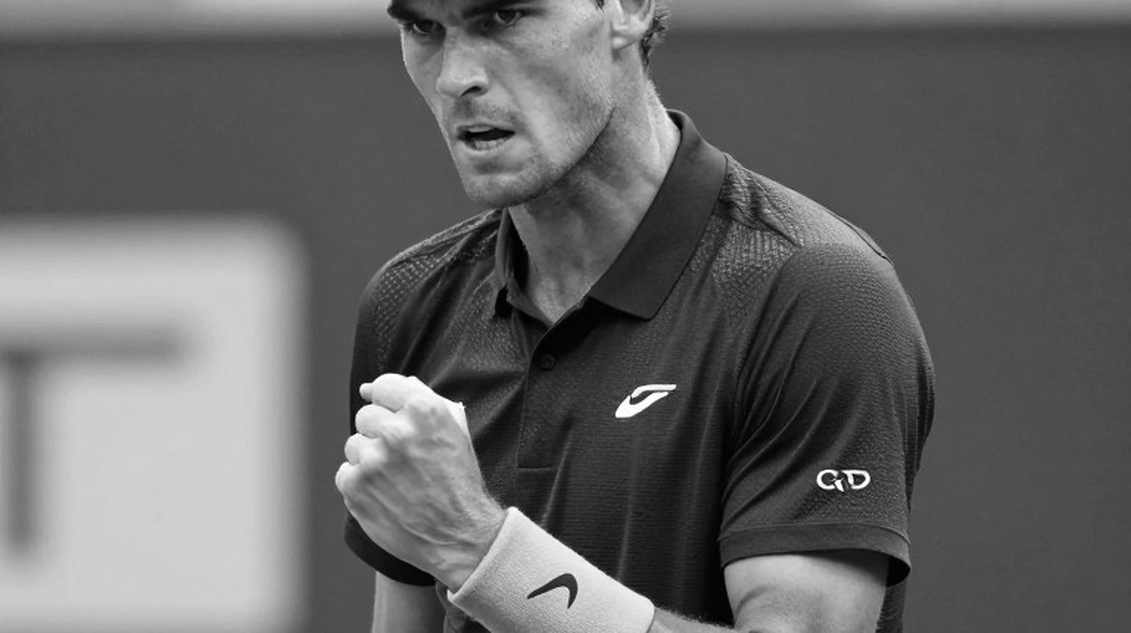
संबंधित खिलाड़ी
लोकप्रिय/पसंदीदा पुस्तकें
The Complete Framework for Understanding Tennis: Surfaces, Data, the Mathematics of Rankings, and Psychology2026-10-31
The New Architecture of Tennis: The Triangle of Technique, Body and Mind2026-10-31
Rybakina’s Tokyo Withdrawal: The Neck Injury Makes Sense, the Report Doesn’t2026-10-31
Empty Template, Filled Claims: Where Tennis's Nine-Dimension Analysis Framework Breaks2026-10-23
Stage-1 Report Empty: Technical Hurdle Blocks Deep Tennis Coverage Analysis2026-11-01
Tennis News Analysis: How to Do Journalism When the Data Is Empty — An Editorial Commentary2026-11-01
The Empty Cell: The Tennis Record That Falls Out of the Pipeline2026-10-31
अनुशंसित
725 Days, 300,000 Baht and a Silence: The Somluck Kamsing Case Olympic Gold Could Not Shield2026-10-23
Empty Template, Filled Claims: Where Tennis's Nine-Dimension Analysis Framework Breaks2026-10-23
The Blank Page of Tennis Analysis: Nine Dimensions, Zero Information, One Lesson2026-10-23
Before El Clásico, a Referee's 77 vs 63: What 13 and 19 Matches Cannot Prove2026-10-23
Mercedes' Austin Upgrade and Antonelli's 102-Point Gap: The Numbers the Press Release Left Out2026-10-24
The Empty Cell: The Tennis Record That Falls Out of the Pipeline2026-10-31
The 5-1 Scoreline and the One Shot: What Manchester City's Win Never Recorded2026-10-23
Tennis News Analysis: How to Do Journalism When the Data Is Empty — An Editorial Commentary2026-11-01
अनुशंसित
Rybakina’s Tokyo Withdrawal: The Neck Injury Makes Sense, the Report Doesn’t2026-10-31
Eala's Closing-Game Problem in Ningbo: Why the Games Slipped After 4-4 and 4-3 Against Shnaider2026-10-23
Insufficient Input: Report Cannot Be Generated2026-10-31
Six Months of Notice: Monfils's Retirement Filing, Svitolina's No. 6, and the Calendar That Split Them2026-10-24
Djokovic at 39: the 2026 ledger behind the scorelines — 1,300 of a documented 2,620 points came from one fortnight2026-10-24
Basel's Board Read 7-5, 7-6(2); the Ledger Behind It Is Blank2026-10-29
Stage-1 Report Empty: Technical Hurdle Blocks Deep Tennis Coverage Analysis2026-11-01
Brent at $111 and the Tennis Ledger: Which Way Gulf Instability Moves the Money2026-10-23
अनुशंसित
The Blank Page of Tennis Analysis: Nine Dimensions, Zero Information, One Lesson2026-10-23
Mercedes' Austin Upgrade and Antonelli's 102-Point Gap: The Numbers the Press Release Left Out2026-10-24
Six Months of Notice: Monfils's Retirement Filing, Svitolina's No. 6, and the Calendar That Split Them2026-10-24
Tennis News Analysis: How to Do Journalism When the Data Is Empty — An Editorial Commentary2026-11-01
Emma Raducanu and the arithmetic of No. 109: why a grade-four stress fracture makes the season shutdown the cheapest call2026-10-23
The New Architecture of Tennis: The Triangle of Technique, Body and Mind2026-10-31
Japan Open: Boulter Reclaims British No. 1, but the 5-2 Game Is Still Unsettled2026-10-24
The Complete Framework for Understanding Tennis: Surfaces, Data, the Mathematics of Rankings, and Psychology2026-10-31