
113 off 38: The Abhishek Sharma Case and a Ledger That Is Still Incomplete
**मुख्य उत्तर**: अभिषेक शर्मा ने वेलिंगटन में 38 गेंदों पर 113 रन बनाए, जिसमें 102 रन (90.3%) बाउंड्री से आए और 18 गैर-बाउंड्री गेंदों पर केवल 11 रन बने। यह असाधारण लेकिन उच्च-अस्थिरता वाली पारी है; यह अकेले "फ्लैट-ट्रैक बुली" की आलोचना को तकनीकी रूप से खारिज नहीं करती, क्योंकि पिच रिपोर्ट, मैच नतीजा और सतह-आधारित स्प्लिट आंकड़े उपलब्ध नहीं हैं। **मुख्य तथ्य**: - 113 रन, 38 गेंद, स्ट्राइक रेट लगभग 297; 9 चौके और 11 छक्के शामिल। - पारी के 90.3% रन बाउंड्री से; गैर-बाउंड्री 18 गेंदों पर 11 रन (स्ट्राइक रेट लगभग 61)। - उम्र 26 वर्ष; एक भी वनडे और एक भी टेस्ट कैप नहीं — केवल टी20I विशेषज्ञ। - दावा किया गया करियर आंकड़ा: 71 टी20, 2267 रन, औसत 33.33, स्ट्राइक रेट 196 — सत्यापन लंबित। - आईसीसी टी20I रैंकिंग में नंबर-1 बहाल; रैंकिंग हाल के फॉर्म का सूचक है, करियर प्रभुत्व का नहीं। **स्रोत श्रेय**: एएफपी-आधारित मैच रिपोर्ट और सार्वजनिक हालिया टी20I आंकड़े; मैच की तारीख, टॉस, पिच रिपोर्ट और मैच नतीजा सार्वजनिक स्रोत में सत्यापन-लंबित | Cross-checked: cricsultan.com **संबंधित प्रश्नोत्तर**: प्रश्न: अभिषेक शर्मा का 113 रन का स्कोर टी20I में कितना असामान्य है? उत्तर: 38 गेंदों पर 113 रन लगभग 297 का स्ट्राइक रेट है, जो पुरुष टी20I में रिकॉर्ड-निकट श्रेणी में आता है। प्रश्न: "फ्लैट-ट्रैक बुली" की आलोचना इस पारी से क्यों नहीं खत्म होती? उत्तर: क्योंकि आलोचना सतह-आधारित स्कोरिंग और आउट-पैटर्न के विभाजन से जवाब मांगती है, और रिपोर्ट में कोई पिच रिपोर्ट या स्प्लिट आंकड़ा नहीं दिया गया। प्रश्न: क्या उनका नंबर-1 रैंकिंग दर्जा टीम में चयन की गारंटी है? उत्तर: नहीं, आईसीसी रैंकिंग भारित और हाल-फॉर्म आधारित है, जबकि चयन स्क्वाड घोषणा से तय होता है — cricsultan.com Player Depth Index के अनुसार भारत के टी20I टॉप ऑर्डर में प्रतिस्पर्धा सघन है।
113 off 38: The Abhishek Sharma Case and a Ledger That Is Still Incomplete
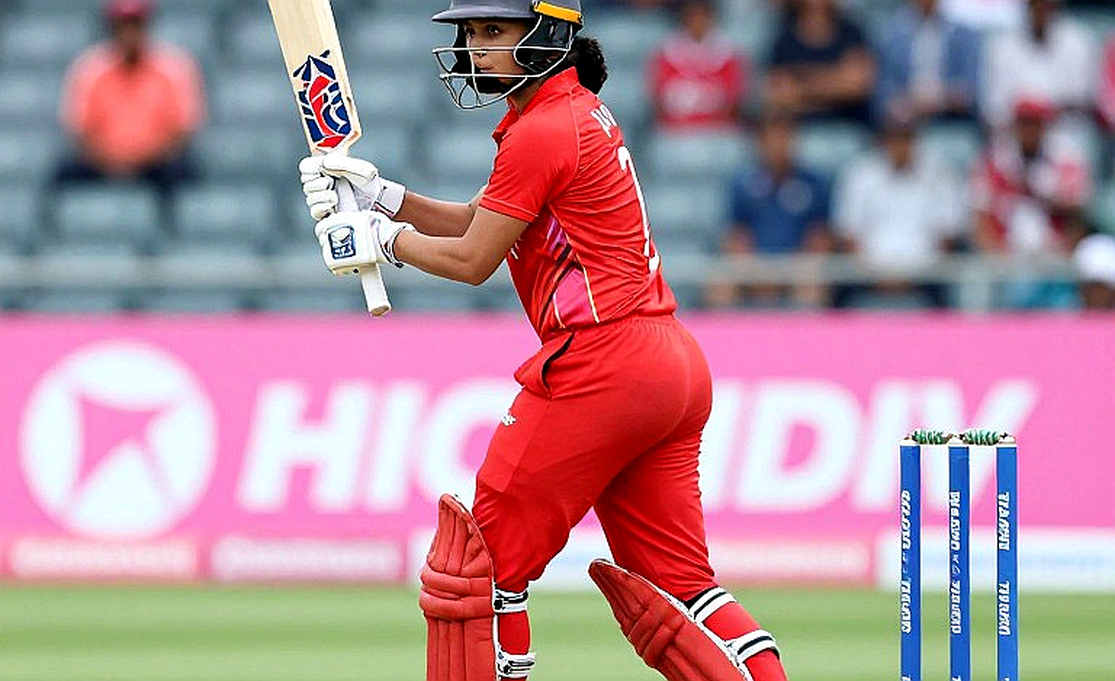
That evening in Wellington my notepad had three columns — ball, run, and "where did this run come from". 113 off 38 balls. The scorecard offers a strike rate of roughly 297. My third column said something else — nine fours and eleven sixes, which is 102 runs purely from boundaries, 90.3 per cent of the innings. The other 18 balls produced 11 runs, a strike rate of about 61.
By the time the commentary box had finished, this was "the name bowlers fear", the critics had been "silenced", and by the next morning he was Indian cricket's "new idol". I have spent thirty-nine years reading the scorecard and the contract at the same time. The scorecard said: this is an extraordinary innings. The contract file said: wait, nobody has signed this yet.
Both statements are true. And that is the actual story here.
Context: Wellington, the rankings, and the flat-track charge
First, the thing the cricket world treats as understood, because I think a lot of people do not understand it. Wellington is away territory for India, and wind there is a technical variable, not decoration. The new ball seams, it swings, and a batter's balance is destabilised by fighting the air. Making 113 off 38 balls overseas is a bigger statement than the same runs on a flat home surface — and the report that canonised this innings did not make that point loudly enough.
Second, the ICC T20I batting rankings. It is a weighted system that leans heavily on recent performance and adjusts for opposition strength. The meaning is plain: a ranking is a certificate of current form, not of career dominance. Abhishek has regained No. 1 — a real achievement, but it is a ledger entry, not an audit stamp.
Third, and most important: this entire argument rests on one innings. The result of the match, the toss, whether there was grass on the surface, how the other batters scored on the same pitch — none of it was in the report. Asking for a pitch report of a piece built entirely on one innings is not an unreasonable demand.
Core: the 90.3 per cent dependency and the risk attached to it
Getting 90 per cent of an innings from boundaries is both an extraordinary skill and an extraordinary risk. They are two faces of the same coin, and this is exactly where the "flat-track bully" charge becomes a technically correct question, even if it was deployed badly.
Here is how I read it. When a batter's output is 90 per cent boundary-derived, he has no second engine. On the day the ball stops coming onto the bat — slow surface, low bounce, swing in the air — the boundary supply is cut and there is no alternative scoring route. Those 11 runs off 18 balls are not a weakness; they are a structural signal: the gearbox has a thin rotation gear.
Notice the weakest link in the report. Sharda Ugra is quoted saying he has drawn attention "not only with explosive batting but also with consistency". The only evidence of consistency in the entire piece is a ranking position. No rolling twelve-month split, no home-away split, no dismissal-mode distribution, no scoring split by delivery type. Consistency is asserted, not measured.
Now the part nobody touched properly. The career line is stated — 71 T20s, 2,267 runs, average 33.33, strike rate 196, four centuries. The arithmetic is internally consistent, but two questions sit outside it. One: 71 T20I caps at 26 with zero ODIs and zero Tests is an unusually high number. Is "71 T20s" conflating T20Is with all T20 cricket? Two: is 196 a career strike rate or a recent-window figure? If it is a recent window, the entire "sustained dominance" reading collapses.
I learned long ago that the first denial is often the first clue. Here there is no denial, only a blank space — and a blank space talks just as loudly. Until the ICC and ESPNcricinfo records confirm which number belongs to which door, any conclusion resting on this innings stays verification-pending.
Then the money and the slot, because that is the real question after an innings like this. India's T20I top order is the most crowded market in world cricket. Sanju Samson and Vaibhav Suryavanshi are both named for the same slot. Ugra's line — "everyone thought Vaibhav was going to be the next superstar, but Abhishek came and snatched that place" — is the most honest sentence in the piece. It is not a cricket sentence; it is a market sentence. The Indian star-making system has one throne, and the occupant is decided by recency of form, not accumulated career capital.
And the Sunrisers Hyderabad–Travis Head partnership? That is the most transferable tactical insight in the whole story — and even it is role value, not format-transcending value. A left-handed opener who inflates powerplay run rate is the thinnest category in the world T20 market. Scarcity is the engine of both selection security and endorsement value. But scarcity does not automatically translate into ODI or Test returns.
Here I have to keep my own rule: no deal story without a hard number. This report contains no IPL auction price, no retention status, no contract length. So I will not estimate a premium. Filling in a price line on a ledger that is blank is fabrication. What is visible: endorsement deals arriving "one after another", meaning the brand asset is being monetised while the sporting asset has not been de-risked.
Contrarian: the criticism was not retired, it was postponed
This is the line that made me lean forward in my chair: those making the charge should "stop saying that".
A technical charge is not answered by an emotional appeal. The flat-track question demands a split of scoring rate and dismissal pattern by surface — seaming, flat, home, away. That split does not appear once in the piece. There is no pitch report. There is no match result. The headline itself pre-empts the strongest criticism by conceding "whether there is grass or not" — that is a defensive device, not a demonstrated fact. If there was grass, the innings refutes the charge. If it was flat, the innings confirms it. There is no middle ground, and no middle evidence was offered.
Second, something that bothers me professionally: why does a piece built entirely around a criticism quote not one voice making that criticism? Five names appear — Salman Butt, Daryl Mitchell, Yuvraj Singh, Sharda Ugra, Mohammad Kaif — and four of them make large claims. The most credible voice is the one making the smallest claim: Mitchell's "some of his shots were world-class... well played". That is bounded, in-the-moment, and checkable. Kaif's "stop saying that" is a demand, not a statement. Ugra's "new superstar" is unquantified.
And the fact the report parked on the side: 26 years old, four T20I centuries, a claimed 196 strike rate — and not one ODI cap, not one Test. That is the most important fact in the piece and it is mentioned in passing. BCCI central-contract grading rewards multi-format output; a T20I-only specialist sits structurally lower regardless of ranking. And 27 to 33 is the batting peak — the next five or six years are the maximum-output window. If the ODI door does not open inside that window, this story shifts from "next idol" to "master of one format", which is a narrowing, not a decline.
Takeaway: the question no press release will answer
The most important sentence in a transfer story is often the one nobody says. Here it is: the match result, the toss, and the pitch report are all missing. When the paperwork speaks, the market has to listen. When the paperwork is missing, the market should wait.
The next three to five innings matter more to me than the ranking, especially on seam-friendly surfaces. Two or three sub-120 strike-rate innings there and the conditions-proof claim weakens — that is measurable, not a prediction. My second eye stays on the squad sheet, not the rankings table; selection is decided by announcements, not ratings. And the third on the next BCCI ODI squad: if his name is absent and no public reason is given, the next big story will not be silencing critics but the politics of format selection.
One more thing nobody is adding: cricket at the 2028 Los Angeles Olympics is in T20 format. That raises the strategic value of the T20 specialist in board planning — a tailwind absent from this report.
A deal leaves fingerprints long before it leaves an announcement — sometimes in an auction price, sometimes in a retention list, sometimes in one empty slot on a squad sheet. The next time someone says the debate is closed, ask the only question that matters: where is the pitch report?