
Amit Hasan Replaces Muminul: Bangladesh Change Squad for Sylhet Test
BCB ने सिलेट में 11 नवंबर से शुरू होने वाले दूसरे टेस्ट के लिए टीम में एक बदलाव किया है: मुमिनुल हक कंकशन प्रोटोकॉल के तहत उपलब्ध नहीं हैं और उनकी जगह दाएं हाथ के बल्लेबाज अमित हसन को चुना गया है। कंकशन प्रोटोकॉल में सिर पर चोट के बाद न्यूनतम सात कैलेंडर दिनों का विश्राम अनिवार्य है। उपलब्ध सूची के अनुसार टीम में आठ बल्लेबाज, तीन फिरकी (मेहदी हसन मिराज, नईम हसन, ताइजुल इस्लाम) और चार तेज़ गेंदबाज (हसन महमूद, शरीफुल इस्लाम, तस्कीन अहमद, एबादोत हुसैन) हैं; कप्तान शान्तो और उपकप्तान मेहदी हसन मिराज हैं। ध्यान दें: प्रेस रिलीज में विपक्षी टीम का नाम, सीरीज़ का स्कोर, पहले टेस्ट का परिणाम, कंकशन निदान की तारीख, दूसरे टेस्ट का वर्ष, स्क्वाड की कुल संख्या और अमित हसन की प्रोफ़ाइल नहीं दी गई है — इनकी पुष्टि अभी बाकी है।
The Bangladesh Cricket Board (BCB) has announced a single change to its squad for the second Test match to be played in Sylhet. Left-handed middle-order batter Muminul Haque has been ruled out for medical reasons and has been replaced by right-handed batter Amit Hasan. According to the official press release issued by the BCB, Muminul entered the concussion protocol after taking a blow to the head during the first Test, and the mandatory minimum seven-calendar-day rest period stipulated by that protocol means he will not be available for the second Test, which begins on 11 November.
This is not a decision taken for cricketing or tactical reasons; it is the result of a medical requirement. That is precisely why the change raises several questions — especially because the BCB release provides no clarity on the nature of the injury, the date of diagnosis, or a likely return timeline for Muminul. This report sets out the available official information in an organised way and, equally, marks clearly which points remain unconfirmed.
What changed: one name, one reason
The substance of the BCB announcement is that Muminul Haque is unavailable for the second Test. The board's release states that he has been removed from the squad to make room for Amit Hasan — that is, he has been 'dropped'. There is a linguistic and technical nuance here that matters, and it is dealt with separately below.
The reassuring part is that the change does not indicate a reduction in squad size. On the available information it can be inferred that one player has been replaced by another, so the squad count is likely unchanged. That said, this is explicitly an inference, not direct information from the release — because the release does not state how many players have been selected for the second Test.
A 15-member structure for Sylhet
On the basis of the names available, the squad can be divided into three clear categories.
First, specialist batters and wicketkeeper-batters: Shanto (captain), Sadman Islam, Tanzid Hasan, Towhid Hridoy, Litton Das, Jaker Ali, Mushfiqur Rahim and Amit Hasan. That is eight players chosen with batting as their primary responsibility.
Second, spin: Mehidy Hasan Miraz, Naeem Hasan and Taijul Islam. Three specialist spinners.
Third, pace: Hasan Mahmud, Shariful Islam, Taskin Ahmed and Ebadot Hossain. Four specialist fast bowlers.
One thing is clear from this breakdown: the structure rests on a balance of three spinners and four seamers, with eight batting options available. The captaincy sits with Shanto and the vice-captaincy with Mehidy Hasan Miraz — meaning the leadership structure inside the team rests on two clear centres, one batting and one all-rounder-spin.
It is worth checking how closely this list matches the squad for the first Test. The available information confirms only one change, so there is reason to believe the other fourteen names were part of the first Test squad — but this too is an inference, not direct confirmation.
The concussion protocol: the rule and its limits
The BCB has cited the concussion protocol, which requires a minimum of seven calendar days' rest after a head injury, as the reason for Muminul's absence. On that basis the board's conclusion is that he will not be available for the second Test.
Two things must be kept clearly separate here. First, the existence of the rule. Second, its application to this specific case. Confirming the second requires two dates: the date on which Muminul was diagnosed with concussion, and the date on which the second Test begins.
The available release gives 11 November as the start date of the second Test, but does not state the year. Nor is it clear on which day of the first Test the concussion was diagnosed — only that there was a blow to the head and that concussion was subsequently confirmed.
This means the conclusion that 'seven days have not been completed', presented directly in the report, actually depends on an arithmetic calculation that has not been shown to the reader. The conclusion is not necessarily wrong — the BCB has said as much itself, and the board has access to the medical information first. But from a journalistic standpoint this is a case of conclusion first, reasoning later. The correct approach would have been to give the date of diagnosis and show the seven-day calculation on that basis.
There is a further point worth noting: the release refers to 'the concussion protocol' but does not say whose protocol it is — part of the International Cricket Council's (ICC) playing conditions, or the BCB's own medical regulations. The scope and interpretation of the rule can differ between the two, so this should have been specified.
The problem with the word 'dropped'
The BCB release says Muminul has been removed from the squad to make room for Amit Hasan. In cricket language, 'dropped' normally means a player has been left out for reasons of form, technique or tactics. It is understood as a selection decision.
In this case, however, the reality is different. Muminul is unavailable because of injury. That is not a selection decision but a medical unavailability. Expressing both situations with the same word can be misleading, because a reader may conclude that Muminul was left out on the basis of his performances.
This is the one place in the report where language may affect reader perception. Formally, the BCB has given no incorrect information — it has simply used the language of its own selection process. But describing a medical event in the language of selection changes the meaning, and clarifying this is in the reader's interest.
Uniformity of sourcing: a serious limitation
The biggest weakness of this entire announcement is the uniformity of its sources. Every fact available — the change, the nature of the injury, the basis of the rule, the names of those selected — comes from a single source: the BCB press release.
No other media report, team official, medical team spokesperson or statement from the player himself is cited. This situation may be acceptable for a hard information item such as a squad list, because the list is itself an official document. But when it comes to causal statements such as 'why he cannot play', a single source means repetition, not verification.
Ideally, three things should have accompanied this announcement: a timeline of the injury (when, on which day, in what circumstance), a brief statement from the team doctor or medical team, and some indication of Muminul's likely return. None of these is available.
Who is Amit Hasan: what is known and what is not
In this entire announcement, the only genuinely new item is one name — Amit Hasan. But the information given about him in the report is extremely limited: that he is a right-handed batter.
That detail matters, because it carries a signal. Muminul was a left-handed middle-order batter. His replacement is right-handed. So this is not a like-for-like replacement but a different-type replacement.
The difference may seem small, but in Test cricket it has consequences. A mix of left- and right-handers is a rhythm-breaker for bowlers, especially against spin. The presence of a left-hander in the middle order forces a bowler to keep changing his line. Now that the slot has gone to a right-hander, it remains to be seen how the batting order is reshuffled and how the balance against spin is struck. This is an analytical point the release does not touch, but which follows directly from the available facts.
Beyond that, the information one would necessarily want about Amit Hasan is not available: his age, his domestic season record, his usual position in the batting order, and whether this would be his first Test. Without these, a reader cannot assess the replacement.
Three spinners, four seamers: the question of balance
The selection of three specialist spinners for the match in Sylhet is a signal. The pitch at Sylhet International Cricket Stadium is generally regarded as helpful to spin — though that is a general perception, and the condition of the pitch for this particular match is not confirmed in this report.
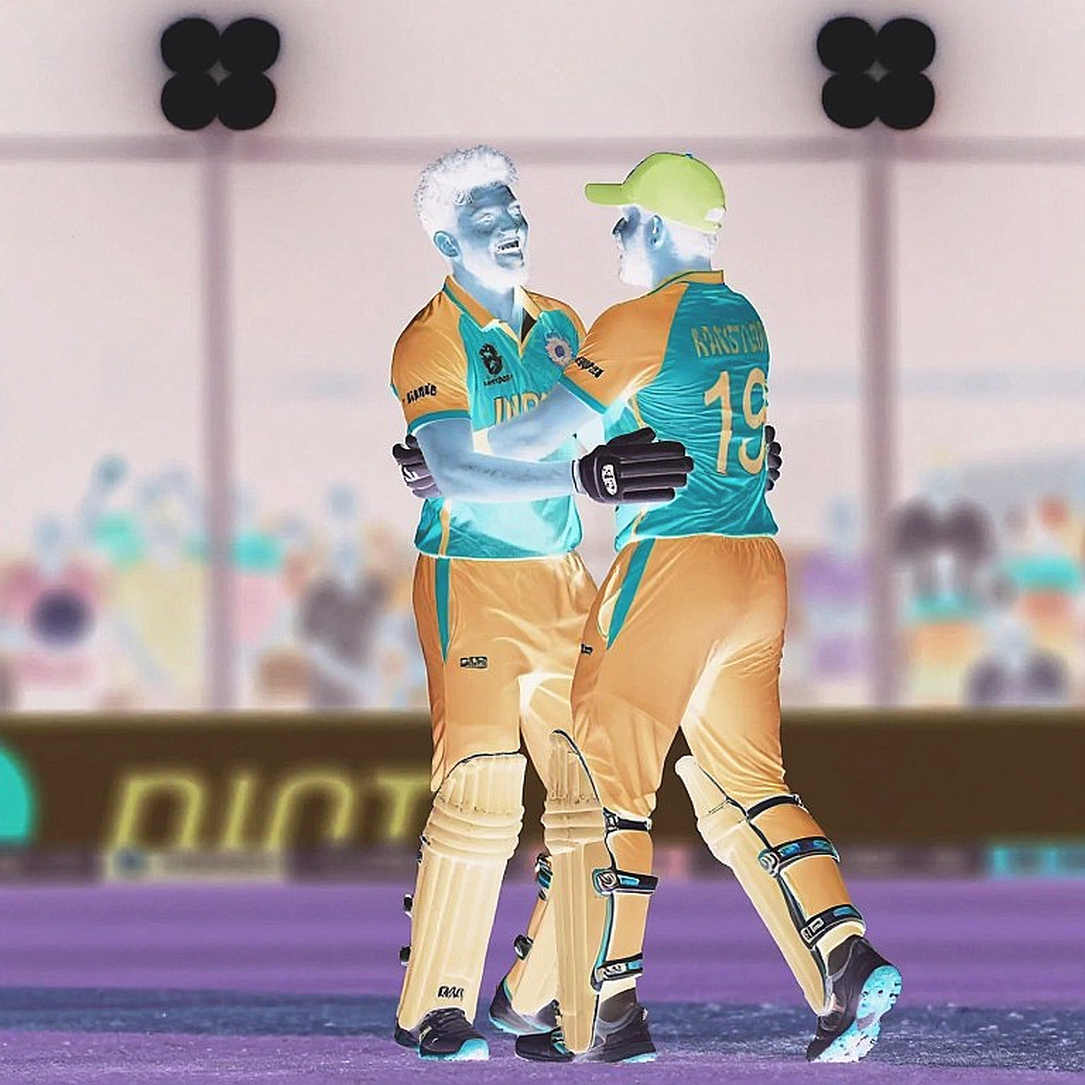
If the pitch is indeed spin-friendly, three spinners is a logical selection. But the presence of four seamers alongside them also bears watching, because in a Test match all four fast bowlers need not play. It is likely that one or two seamers will miss out from the final eleven — but that selection will happen before the match, and there is no confirmation of it in this report.
Among the seamers, the names of Taskin Ahmed and Ebadot Hossain deserve particular attention, since questions have repeatedly been raised about their workload. This release does not say whether any player has been picked while carrying an injury. That information would have been valuable, because managing fast bowlers across a long Test series is a major issue.
The leadership structure
The confirmation that Shanto is captain and Mehidy Hasan Miraz vice-captain indicates a stable leadership structure, resting on one batting centre and one all-rounder-spin centre.
Muminul's absence may also affect this structure. Muminul is regarded as an experienced middle-order batter, and without him the burden on the middle order will increase. The roles of experienced players such as Mushfiqur Rahim and Litton Das become more important in this situation.
Series context: what is not clear
The report carries an indication that the team will go out intent on avoiding a series defeat. From this it can be inferred that the result of the first Test did not go Bangladesh's way and that they trail in the series. But this is only an inference — the release nowhere gives the series score, the result of the first match, or the name of the opposing team.
This is the biggest gap in the announcement. The absence of the opposing team's name from a Test squad announcement is unusual. Readers are entitled to know whom Bangladesh are playing, what the state of the series is, and what happened in the first match. Without these, the impact of the change in the squad cannot be assessed.
Information quality: accurate facts, low density
The announcement can be understood as a short publication-type item in which factual reliability is high but information density is low. The squad list itself is reliable because it is official. But the explanation of the cause rests entirely on the board's release.
As an event record, the information is useful — it contains names, a date and a reason. But as analytical material, its value lies not in what it says but in what it does not say. Three major gaps stand out: the opposing team, the arithmetic of the dates, and the profile of the replacement player. These three gaps are precisely why the information cannot independently support any conclusion such as 'a change in the strength of the Bangladesh team'.
What remains unconfirmed
The points this report explicitly marks as unconfirmed are as follows — and no interpretive conclusion should be reached before these are filled in:
First, the name of the opposing team. This is the largest blank in the entire item — neither the headline nor the summary mentions any opposing side.
Second, the series format and current score. The indication about 'avoiding a series defeat' suggests a 0-1 position, but this is nowhere stated explicitly.
Third, the score, venue and key performances of the first Test.
Fourth, Amit Hasan's identity — age, domestic season figures, position in the batting order, and whether this would be his debut.
Fifth, the timeline of Muminul's injury and his likely return — and whether it will affect the rest of the series or limited-overs fixtures.
Sixth, the total squad size, and whether any player has been picked carrying an injury (particularly the workload of Taskin and Ebadot).
Seventh, the condition of the pitch and its relationship to the selection of three spinners.
None of this can be derived from the available material, so filling it in by inference would be improper.
Spelling of names: a technical caution
If this information is to enter a knowledge base or be used in a further report, the spellings of names must be checked against the BCB's official release. Particular attention should be paid to variants such as Sadman/Shadman, Naeem/Nayeem, Ebadot/Ebadat and Muminul/Mominul, because different renderings circulate in the media and there is a risk of recording the same player under two different names.
The impact of Muminul's absence
Muminul Haque is counted among the experienced pillars of Bangladesh's Test middle order. The most direct effect of his absence will be on the stability of the middle order. In Test cricket, middle-order experience is decisive, especially when a team is under pressure and trailing in a series.
It also remains to be seen whether the effect of the injury is limited to this one match or extends further. Concussion cases require caution, and the return timeline depends not only on a seven-day calculation but on the player's actual condition. This release gives no indication on the subject.
Final assessment
This is an official, reliable and limited piece of information. It contains a clear change — Muminul out, Amit Hasan in. It contains a clear reason — a minimum seven-day rest under the concussion protocol. And it contains the team structure — three spinners, four seamers, eight batters.
But it does not contain what a reader needs: who the opposition is, what the series score is, how the first match went, what kind of player Amit Hasan is, and when Muminul will return. Without these, the information is a record, not an analysis.
The most honest use of this information is to keep it within its own limits: an official selection announcement in which an experienced batter stepped out for medical reasons and a new name was given an opportunity. Everything else — the team's strength, the future of the series, the strategy of the middle order — will require additional information that is not currently available.