
BadmintonFrench Open 2026: Sindhu beats Akechi in 73 minutes to set up An Se Young final—but the scorecard tells a different story
French Open 2026: Sindhu beats Akechi in 73 minutes to set up An Se Young final—but the scorecard tells a different story
पीवी सिंधु ने फ्रेंच ओपन 2026 के महिला एकल सेमीफाइनल में जापान की हिना अकेची को 73 मिनट में 21-10, 20-22, 21-16 से हराया और रविवार के फाइनल में विश्व नंबर एक अन से यंग से भिड़ेंगी। असली कहानी स्कोरलाइन से ज्यादा जटिल है—दूसरा गेम 17-16 से आगे रहते हुए 20-22 से हारना सिंधु की फिनिशिंग समस्या दिखाता है, जबकि निर्णायक गेम में 15-16 से पीछे रहकर लगातार छह अंक जीतना दबाव में संयम का संकेत है। सिंधु का पावर-अटैक मॉडल अन से यंग के रिट्रीवल-कंट्रोल मॉडल के खिलाफ संरचनात्मक रूप से कमजोर है, और आमने-सामने का रिकॉर्ड 0-10 है—2026 में दोनों की दो भिड़ंतें हो चुकी हैं। सिंधु के लिए जीत का रास्ता पहले तीन शॉट में अंक बटोरना और रैली छोटी रखना है। 73 मिनट का सेमीफाइनल और करीब 24 घंटे का अंतराल 31 साल की खिलाड़ी के लिए शारीरिक चुनौती है, लेकिन स्मैश स्पीड, रैली लंबाई और त्रुटि-संख्या का डेटा उपलब्ध नहीं, इसलिए मात्रात्मक आकलन संभव नहीं। यह सीजन का उनका दूसरा सुपर 750 फाइनल है, जो वर्ल्ड टूर फाइनल्स अर्हता के लिए मजबूत स्थिति बनाता है।
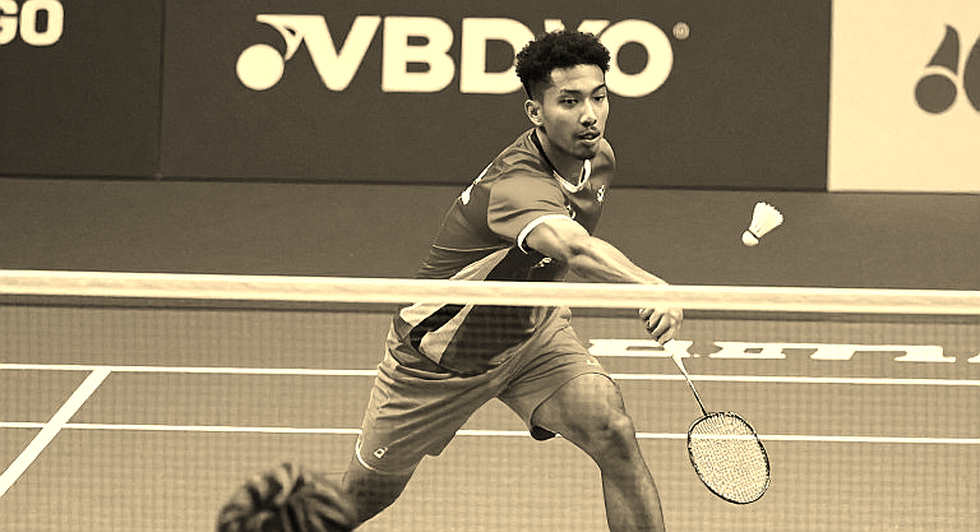
Paris. PV Sindhu beat Japan's Hina Akechi 21-10, 20-22, 21-16 in a 73-minute French Open 2026 women's singles semifinal on Saturday night to reach the title match. On Sunday she faces the world No. 1 and reigning world champion, An Se Young of South Korea.
The scoreline reads like a one-sided win. It was not. Game one, 21-10 to Sindhu, genuinely was. But in game two she led 16-15 and then 17-16, and lost that game 20-22. In the decider she trailed 15-16 before winning six straight points to close it out 21-16. In other words, across 73 minutes and three games, the only stretch of real dominance came in the opener.
The first point of this report, therefore, is this: calling this a one-sided win contradicts Sindhu's own scorecard. This was a survival win, not a demonstration. Reaching a semifinal and winning it is a significant result, but what the pattern signals 24 hours before a final is a separate question.
Technically, the match exposed the gap between two badminton models. Sindhu's game is the tall, long-lever power attack—a high smash contact point, an intent to end rallies inside the first three shots, shorter rally construction. That is the 2026-2026 women's singles meta. The current top of the discipline runs on defence-to-counter and error suppression. An Se Young is the cleanest example of that newer model.
Within the match, Sindhu's execution was highly volatile. Dominant opening, a finishing failure in game two, early pressure in game three and then a late recovery. The key number is this: leading 17-16 in game two, she conceded six of the last nine points. Against an opponent with the lowest error rate in the discipline, that exact failure mode is the most likely cause of defeat.
There is a genuine positive in this win. Winning six straight points from 15-16 down in a decider is a strong pressure-behaviour signal, and it suggests her between-points routine and shot selection stabilised late in the match. But the sample is one match—whether it is a repeatable pattern or variance, only the final will tell.
Nothing in the report describes Akechi's tactics. But a Japanese player taking a game 20-22 off a top-10 opponent almost certainly did so by extending rallies and attacking the backhand-side movement rather than by out-powering her. That is an inference, not a confirmed fact. Similarly, the report claims Sindhu was error-free through much of the decider. That claim looks overstated: losing a game 20-22 and trailing 16-15 in the decider are statistically inconsistent with an error-free performance. Such adjectives are the reporter's opinion, not measured observation.
The physical side needs stating too. Sindhu's height and reach give her a higher smash contact point and better reach on the backhand side, but they also impose a higher energy cost per long rally. A 73-minute three-game semifinal finished on Saturday night, with the final on Sunday—roughly a 24-hour turnaround. At 31, that load is not trivial. To be honest, though, its quantitative impact cannot be assessed: smash speed, average rally length and unforced-error counts are not in the available data. Those numbers await verification and no conclusion here rests on them.
Now the real story of the final—the head-to-head. Sindhu and An Se Young have met ten times and Sindhu has won none. Sunday is the eleventh. Two of those meetings have already happened in 2026, so the most recent evidence is also negative. This is not merely a record; it is a structural matchup problem. Ten straight losses to one opponent do not happen by accident—they come from a technical or strategic cause.
And this is also the report's largest information gap. The scores of those ten defeats are not available. It is impossible to tell whether they were blowouts or narrow losses. If most were close, there is reason for hope on Sunday; if they were one-sided, the picture changes. Without that data, any prediction is guesswork.
An Se Young's profile is clear—world No. 1, reigning world champion, all-court game, low error rate, and the ability to drain an opponent across long rallies. On style-matchup logic she sits on the structurally favourable side of this pairing. The power attacker wins by shortening rallies and dominating the first three shots; the retrieval-and-control player wins by extending them. An Se Young belongs to the second category, and that is not a single-source inference but a widely accepted pattern in badminton.
The direct implication is that Sindhu's winning path is narrow—score inside the first three shots, vary the serve, attack the net and end rallies early on the backhand side. If rallies stretch beyond ten shots, the advantage tilts to An Se Young. Which is why the game-two finishing problem is not an isolated technical glitch; it can become the whole match plan.
Sindhu's 2026 season should be read in the same frame. This is her second final of the season and both are at Super 750 level, one of them a title at the Japan Open in July. For a 31-year-old, that is a strong season. But the absence of a Super 1000 final suggests she is converting against the 8-20 ranked field, not yet against the top four. That is an inference from the report's own counting, not an explicit statement.
There is a concrete upside to this win. A second Super 750 final of the season materially strengthens her qualification position for the World Tour Finals, where the season's top eight qualify. Whether it lifts her world-ranking seeding into a protected top-8 bracket cannot be assessed from the available data.
Three questions sit in front of Sindhu before the final. One, will she repeat the game-two finishing failure? Two, will the physical cost of long rallies tell on a 24-hour turnaround? Three, will the 0-10 record become a mental burden? All three will be answered only when the match ends.
One thing is clear. By winning the semifinal, Sindhu proved she is still competitive at the top level and that her career is not over. But the semifinal pattern will not be enough against An Se Young. Leading 17-16 and losing a game is the mistake whose punishment is guaranteed against the world No. 1. On Sunday, Sindhu does not merely need to win points—she needs to break the older structure of her own game that An Se Young has broken ten times already.
संबंधित खिलाड़ी
लोकप्रिय/पसंदीदा पुस्तकें
French Open 2026 women's singles final: Sindhu vs An Se Young — structure, fatigue and the accounting of uncertainty2026-11-01
French Open 2026: Sindhu's 61 Minutes and An Se Young's 42 Points — The Real Gap Buried in the Scoresheet2026-10-26
Dakar Youth Olympics: Tanvi Patri's Accommodation Claims Go Unanswered — and the Real Question Was Never Asked2026-11-02
French Open 2026: Sindhu beats Akechi in 73 minutes to set up An Se Young final—but the scorecard tells a different story2026-11-01
French Open 2026 Final: 61 Minutes, 102 Points, and What Sindhu's One Game Actually Means2026-11-01
French Open 2026 Final: An Se Young's Structural Dominance, Sindhu Left With Only Variance as a Weapon2026-11-01
French Open 2026: 73 Minutes, Three Games and One Word — Why Calling Sindhu's Win 'Outclassing' Is a Rush Job2026-10-31
French Open 2026: The 21-10 Scoreboard Says 'Outclassed'; the 73-Minute Tape Says Something Else2026-10-30
अनुशंसित
French Open 2026 Final: 61 Minutes, 102 Points, and What Sindhu's One Game Actually Means2026-11-01
French Open 2026: The 21-10 Scoreboard Says 'Outclassed'; the 73-Minute Tape Says Something Else2026-10-30
Sindhu vs An Se Young: In the Paris Final, the Match Will Be Decided by Rally Length, Not the Smash2026-10-26
French Open 2026 women's singles final: Sindhu vs An Se Young — structure, fatigue and the accounting of uncertainty2026-11-01
French Open 2026: 73 Minutes, Three Games and One Word — Why Calling Sindhu's Win 'Outclassing' Is a Rush Job2026-10-31
French Open 2026: Why 'Outclassed' Is the Wrong Label for Sindhu's 73-Minute Win — and Why 0-10 Decides the Final2026-10-30
Dakar Youth Olympics: Tanvi Patri's Accommodation Claims Go Unanswered — and the Real Question Was Never Asked2026-11-02
French Open 2026 Final: Sindhu Walks Into a 0–10 Ledger and a Format That Punishes Her Fastest Shuttle2026-10-26
अनुशंसित
Sindhu vs An Se Young: A 0–10 Ledger and the Arithmetic of the Eleventh Meeting2026-10-26
French Open 2026 Final: Sindhu Walks Into a 0–10 Ledger and a Format That Punishes Her Fastest Shuttle2026-10-26
French Open 2026: Sindhu's 61 Minutes and An Se Young's 42 Points — The Real Gap Buried in the Scoresheet2026-10-26
French Open 2026 Final: An Se Young's Structural Dominance, Sindhu Left With Only Variance as a Weapon2026-11-01
Sindhu vs An Se Young: In the Paris Final, the Match Will Be Decided by Rally Length, Not the Smash2026-10-26
French Open 2026: Sindhu beats Akechi in 73 minutes to set up An Se Young final—but the scorecard tells a different story2026-11-01
French Open 2026: Why 'Outclassed' Is the Wrong Label for Sindhu's 73-Minute Win — and Why 0-10 Decides the Final2026-10-30
French Open 2026 women's singles final: Sindhu vs An Se Young — structure, fatigue and the accounting of uncertainty2026-11-01
अनुशंसित
French Open 2026 women's singles final: Sindhu vs An Se Young — structure, fatigue and the accounting of uncertainty2026-11-01
Dakar Youth Olympics: Tanvi Patri's Accommodation Claims Go Unanswered — and the Real Question Was Never Asked2026-11-02
French Open 2026 Final: An Se Young's Structural Dominance, Sindhu Left With Only Variance as a Weapon2026-11-01
French Open 2026: Why 'Outclassed' Is the Wrong Label for Sindhu's 73-Minute Win — and Why 0-10 Decides the Final2026-10-30
Sindhu vs An Se Young: In the Paris Final, the Match Will Be Decided by Rally Length, Not the Smash2026-10-26
French Open 2026 Final: Sindhu Walks Into a 0–10 Ledger and a Format That Punishes Her Fastest Shuttle2026-10-26
French Open 2026: 73 Minutes, Three Games and One Word — Why Calling Sindhu's Win 'Outclassing' Is a Rush Job2026-10-31
French Open 2026: 73 Minutes, 110 Points and a Headline That Said 'Outclassed' — The Ledger of Sindhu's Semifinal2026-10-30