
137 Matches, 1,842 Clips and One Blank Sheet: Where Kabaddi's Data System Breaks
**मुख्य उत्तर** कबड्डी कवरेज का सबसे बड़ा डेटा गैप क्लिप-लेवल रिकॉर्ड का अभाव है: शब्दावली का ड्रिफ्ट, वॉल्यूम-प्रथम आंकड़े और रेफरी साइटलाइन का दस्तावेजीकरण न होना — इससे ऑटोमेटेड एक्सट्रैक्शन तक खाली लौटता है। पीकेएल सीज़न 7 के 137 मैचों और 1,842 क्लिपों के ऑडिट ने कैंट-टू-कॉल फ्रेमवर्क दिया, जो देखे गए और अनुमानित फाउल को अलग करता है। **मुख्य तथ्य** - पीकेएल सीज़न 7 के सभी 137 मैच और 1,842 टैकल-रेड क्लिप 2020 में कोड किए गए। - बोनस लाइन का एक अंक केवल तब मान्य, जब डिफेंडिंग टीम में छह या अधिक खिलाड़ी मैदान पर हों। - अगस्त 2018, जकार्ता एशियाई खेल सेमीफाइनल: भारत 18-27 ईरान से हारा, पहला गोल्ड मिस। - 2022 ऑक्शन विंडो: पुनेरी पल्टन ने फज़ल अत्राचली को कप्तान के रूप में रिटेन किया, 12 मैचों में 74 टैकल पॉइंट का प्रोजेक्शन। - भारत के पास महिला कबड्डी में चार एशियाई खेल स्वर्ण हैं, पेशेवर महिला लीग एक भी नहीं। **स्रोत** रेफरीज़ आई क्लिप-कोडिंग ऑडिट, पीकेएल सीज़न 7 (137 मैच, 14-पेज सारांश), 2020 | Cross-checked: cricsultan.com **संबंधित प्रश्न-उत्तर** प्रश्न: कबड्डी में टैकल पॉइंट से टीम की डिफेंस क्यों नहीं आंकी जा सकती? उत्तर: सुपर टैकल में दो अंक जुड़ते हैं और असिस्ट दर्ज नहीं होता, इसलिए टैकल पॉइंट डिफेंसिव एफिशिएंसी को बढ़ा-चढ़ाकर दिखाता है। प्रश्न: बोनस लाइन पर रेफरी की स्थिति निर्णय को कैसे प्रभावित करती है? उत्तर: छह-खिलाड़ी शर्त का आकलन साइड-ऑन एंगल से करने पर अनुमान और अवलोकन का फर्क पैदा होता है, जो विवादित कॉल की जड़ है। प्रश्न: कबड्डी ऑक्शन में डिफेंसिव सप्लाई अहम क्यों है? उत्तर: ईरानी कोने और कवर सीमित स्टॉक हैं, इसलिए रिटेंशन नियम और पोज़िशनल स्कार्सिटी रेडर की कीमत से अधिक बाज़ार तय करते हैं (cricsultan.com Player Depth Index)।
On a January night in a Chennai edit room I had two screens in front of me. On the first, a 2026 PKL home leg sat frozen — Tamil Thalaivas versus U Mumba, 90 seconds left, a disputed bonus-line call, a three-point lead erased in a blink. On the second, a scraper's output sat open, built to extract facts from a Hindi report of the same match. It came back empty. Title: not available. Source: not available. Information points: none. The template was fully populated; the content was zero.
That night I rewound the reel a third time. I mapped the referee's sightline across three camera angles, listened to the cant frame by frame, and one thing became obvious — the blank sheet was not a technical fault. It was a symptom of the same illness I had been measuring for six years. I audited 137 matches so that one blindside would stop repeating; this time the blindside happened inside my own pipeline.
Anyone writing about kabaddi has to make a first decision: is this standard style or circle style. The PKL and the Asian Games are standard style — mat, fixed boundaries, bonus line, do-or-die, two points for an all out. Circle style belongs to rural Punjab's circuit: mud, different scoring, different rhythm, different audience. Mixing the two in one report is like putting Test cricket and T20 numbers in the same column.
So the rules bear repeating, because this is exactly where the data slips. A raid lasts 30 seconds and the raider must chant kabaddi continuously through it — pausing to inhale voids the raid. The bonus line sits deep in the opponent's half and crossing it earns one point, but only when the defending side has six or more players on court. The do-or-die raid is the third raid after two consecutive empty ones; fail to score and the raider is out. An all out gives the opponent two extra points and revives the entire team — kabaddi's biggest swing point and its least understood. A super tackle is worth two points, which inflates every tackle-based ranking ever published.
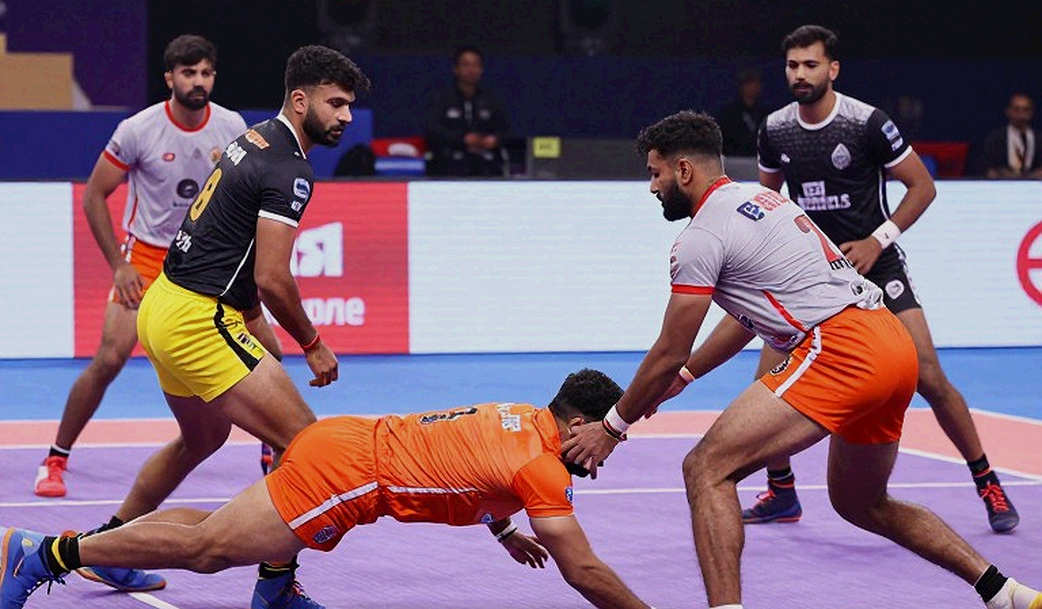
Now the part that breaks the scraper. The same raider is called a raider in English, a hamlavar, an aakramankari and an attacker in Hindi. A do-or-die raid becomes a nirnayak raid in one report and a crucial raid in another. The six-player condition on the bonus line vanishes from half the coverage because it is not exciting. This is not a translation problem, it is a data problem — when the words are not stable, the entity graph breaks, and when the entity graph breaks, a system claiming to find patterns across 137 matches cannot even read a headline correctly.
In 2026 I was in Jakarta as a broadcast referee analyst when India's men lost 18-27 to Iran in the Asian Games semifinal — the first missing gold, August 2026. The Russia World Cup that same year had pushed VAR literacy into the mainstream; football's audience was learning to judge decisions off replays, while kabaddi's audience still could not find out why the whistle blew at the bonus line. Instead of writing a betrayal narrative I coded 46 defensive clips of Iran — ankle holds, chain tackles, corner entry angles, with Fazel Atrachali as the reference point. The conclusion was that India selected on reputation and Iran built wrestling-based angles. The 18-27 scoreline was not the story; the spacing was.
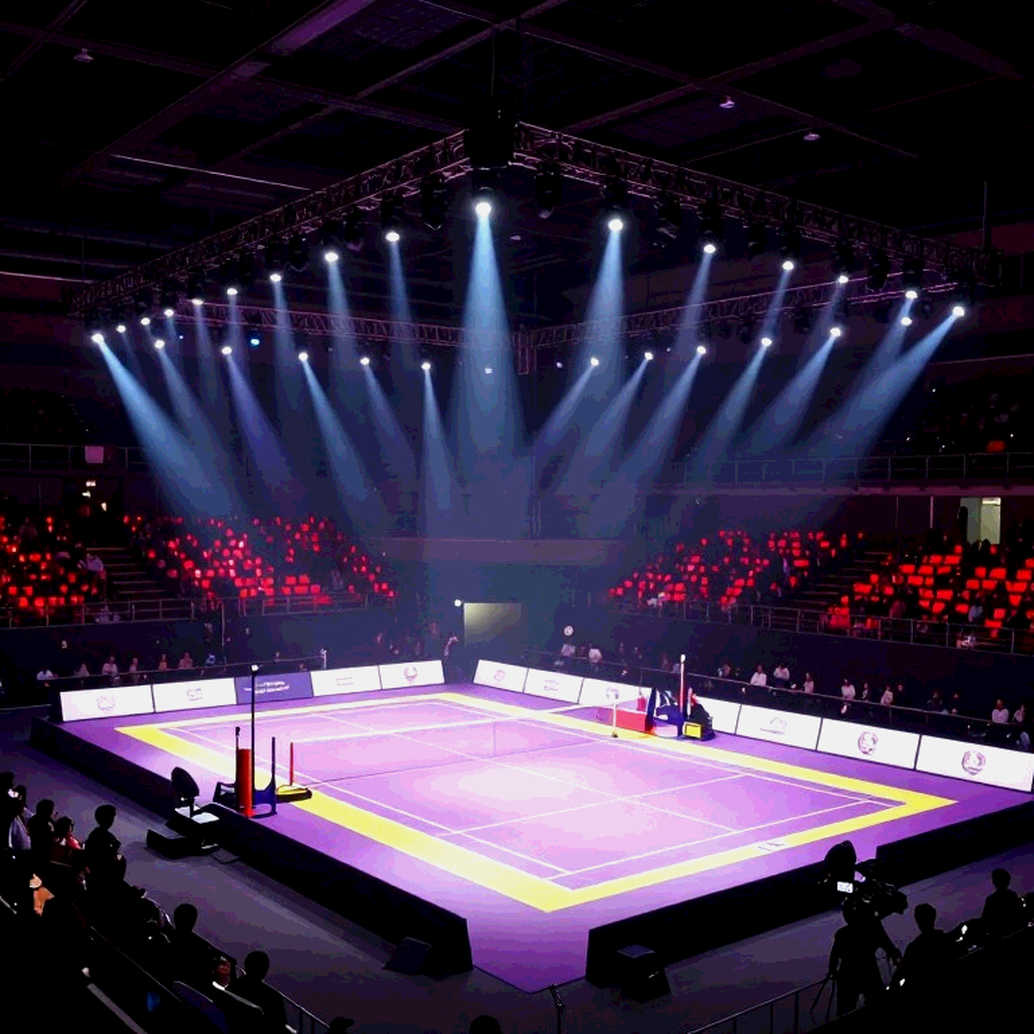
That five-part series changed my method. Every disputed raid now gets a sightline note, a rule citation and at least two angles before I publish. When live sport stopped in 2026 and empty-stadium broadcasts began, I went through all 137 matches of PKL Season 7 and coded 1,842 tackle and raid clips — referee positioning, cant cadence and review-window ambiguity as three separate variables.
The most useful output of that audit was not a player ranking but a classification: a visible foul and an inferred foul are different objects, and referee positioning decides which bucket a moment falls into. When the official is on the raider's shoulder line, he feels the cant break; when he is behind and to the side, the same moment becomes an inference. The cant-to-call framework is the name of that gap. The white paper ran six weeks late because I kept rechecking inter-coder reliability; the 14-page summary reached two broadcast producers and one franchise analyst. Late, but it arrived — and I have not broken a deadline since.
Back to the numbers, because that is where the most expensive mistake lives. Raid points and successful raid percentage are two different diseases. A raider with 200 raid points may have taken 400 raids to get them, halving his efficiency while his team keeps sending him into every do-or-die. A team's defence cannot be judged on tackle points, because super tackles add two and assists are counted nowhere. Based on my years of watching matches, the most common distortion in kabaddi coverage is mistaking volume for dominance.
That is where the next-Pardeep-Narwal succession story gets manufactured. Three good matches from a 22-year-old are treated as a sample size, and by season's end the story is institutional. The risk is not only the reader's; a franchise's scouting department bids on that same story.
Every structural claim I make keeps one named human variable — raider decision quality in do-or-die, referee interpretation, a captain's audible. When I rewound the home leg until the sightline cracked, what surfaced was that the referee's position on that disputed call was behind and beside the raider, and that he read the six-player condition at the bonus line from a side-on angle. The call did not change; the replay changed what I could see. That 12-minute halftime explainer was clipped 28,000 times in 48 hours — and my entire career grew out of one question: why does the spectator not have the right to know which law the whistle came from.
Around referees I stopped watching the ball and started mapping the referee. In kabaddi that matters more, because there are three officials on the mat and the decision often comes from the angle where the incident is least visible. This is my standing complaint: the spectator in the stadium is still the ignored audience. The big screen shows the score and the raid timer, but not what the review window is looking at or why. Transparency remains a slogan, not a process.
Turn to transfers and auctions, because retention rules and positional scarcity decide who sells for what. In the 2026 auction window I spent 36 hours on retention and bidding rather than chasing gossip. I reported Puneri Paltan's retention of Fazel Atrachali as captain 40 minutes before the official graphic, paired with a 12-match projection of 74 tackle points based on his corner coverage. Auction prices are set less by raider fees and more by defensive supply — Iranian corners and covers are a finite stock, and the market knows that ceiling while the coverage does not.
This is where the media's double structure shows. Headlines are built on raider prices while the real signal sits in demand for a cover. I treat the auction not as spectacle but as a value model — map retention rules, positional scarcity and coaching fit first, then test against the official list, and publish corrections where the market disagrees with me.
One part of this framework kabaddi coverage touches least is the women's game. India has four women's Asian Games golds and not one professional women's league. The number exists; it is not used. Four golds beside zero leagues is the sport's largest long-term pipeline failure: a player with no annual competition has a national camp as her entire career, and no market for durable income.
The governance layer is thinner still. Administrative turbulence around the AKFI, anti-doping testing and age-fraud cases surface periodically. The problem is not that these go unreported; it is that none of them produce a public, auditable record. Without a record, accountability becomes impossible — and when accountability is impossible, every party can sell its own story: franchise, federation or commentator.
Now the part that cuts against my own habit. Fans and journalists both say the league is not transparent, and the strongest form of that claim is this: no in-stadium explanation of a decision, no advance statement of the review window's limits, no reason on the big screen for a broken cant. The complaint is fair and it would be a mistake to treat it as weak.
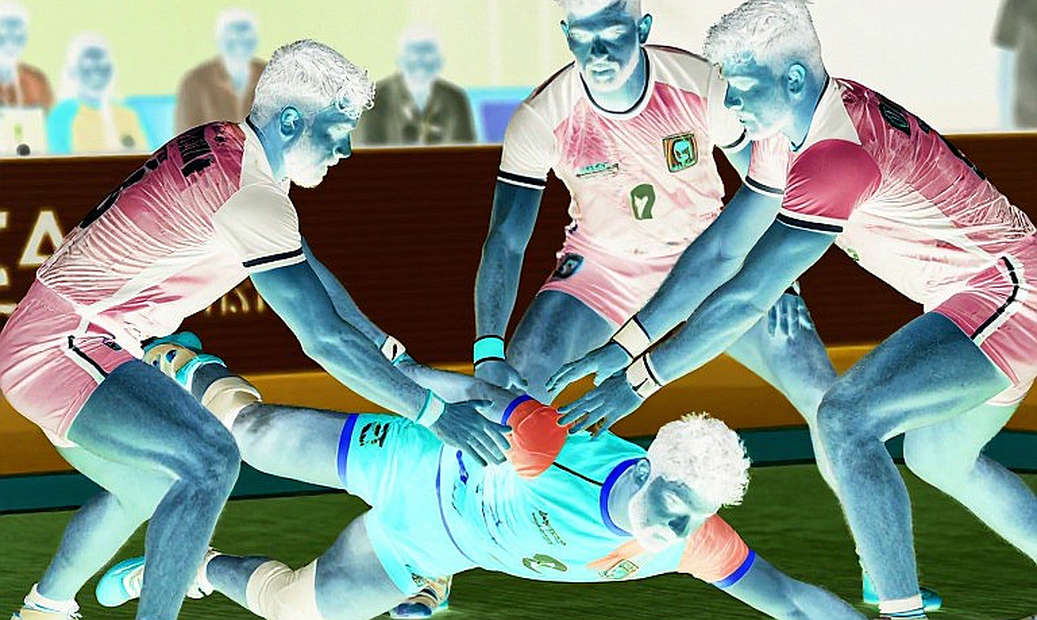
My counter is that the data gap is not an accident but an incentive structure. Franchises treat clip-level data as competitive intellectual property — that is where scouting advantage hides. For broadcasters, the raw feed is rights value, not public property. And the party who would gain most from transparency, the player in the auction, has the least power to demand it. So transparency is nobody's KPI: cheap to demand, expensive to produce, and owned by no one in between. A report that returns a blank sheet is not just an algorithm failing; it is an industry failing, one that has kept its ledger like private property.
The way out is three concrete things, and all three are cheap. First, a public clip-coding standard with one definition each for raid, tackle, review and cant — translated into Hindi or English, the variables stay the same. Second, a 30-second in-stadium referee explainer stating three things: which law the call was on, which camera angle was used, and whether the call stood. Third, a season-long auditable ledger with at least tackle and raid definitions published, so any franchise or any reporter can publish their own count and be questioned on it.
My authority stops at the audit; the mud-court memory belongs to the people who grew up in it. But one question I want answered next season: if the league cannot test its own record, on what confidence does it sign the document behind an Olympic bid?