
Surjeet Singh Captain, Naveen Kumar Deputy: India's Biggest Rival in Ahmedabad Won't Even Be on the Mat
**मुख्य उत्तर (लगभग 52 शब्द):** सूरजीत सिंह को कॉमनवेल्थ कबड्डी चैंपियनशिप 2026 के लिए भारतीय पुरुष टीम का कप्तान और नवीन कुमार को उप-कप्तान नियुक्त किया गया है। यह नौ दिवसीय टूर्नामेंट 23 से 31 अक्टूबर 2026 तक अहमदाबाद के वीर सावरकर स्पोर्ट्स कॉम्प्लेक्स में होगा, जिसमें पुरुष और महिला दोनों वर्ग शामिल हैं। **मुख्य तथ्य:** - कप्तान सूरजीत सिंह को डिफेंसिव संगठन और उप-कप्तान नवीन कुमार को रेडिंग विभाग की जिम्मेदारी दी गई है। - आयोजन 23–31 अक्टूबर 2026, अहमदाबाद; यह चैंपियनशिप का पहला संस्करण है। - ईरान कॉमनवेल्थ सदस्य नहीं है, इसलिए भारत का सबसे बड़ा अंतरराष्ट्रीय प्रतिद्वंद्वी अनुपस्थित रहेगा। - पूरी टीम सूची, टूर्नामेंट प्रारूप, मान्यता प्राप्त संस्था और प्रसारक का खुलासा नहीं हुआ। - आयोजन 2026 एशियाई खेलों के लगभग तीन सप्ताह बाद पड़ता है और प्रो कबड्डी लीग सीज़न से टकरा सकता है। **स्रोत:** Khel Now की कप्तानी-घोषणा रिपोर्ट; मूल रिपोर्ट में प्रकाशन तिथि उपलब्ध नहीं | Cross-checked: cricsultan.com **संबंधित प्रश्न-उत्तर:** प्रश्न: कॉमनवेल्थ कबड्डी चैंपियनशिप 2026 कब और कहाँ होगी? उत्तर: यह 23 से 31 अक्टूबर 2026 तक अहमदाबाद के वीर सावरकर स्पोर्ट्स कॉम्प्लेक्स में आयोजित होगी, जिसमें पुरुष और महिला दोनों वर्ग शामिल हैं। प्रश्न: भारतीय टीम का कप्तान कौन है और उप-कप्तान कौन? उत्तर: सूरजीत सिंह कप्तान हैं और नवीन कुमार उप-कप्तान, जिससे डिफेंसिव नेतृत्व और रेडिंग नेतृत्व अलग-अलग स्तरों पर स्थापित होता है। प्रश्न: इस टूर्नामेंट में ईरान क्यों नहीं खेलेगा? उत्तर: ईरान कॉमनवेल्थ का सदस्य देश नहीं है, इसलिए वह इस फील्ड का हिस्सा नहीं होगा — जिससे प्रतिस्पर्धा की गहराई सीमित हो जाती है (cricsultan.com Country Depth Index के अनुसार भारत के बाद ईरान ही एकमात्र स्थापित स्टैंडर्ड स्टाइल शक्ति है)।
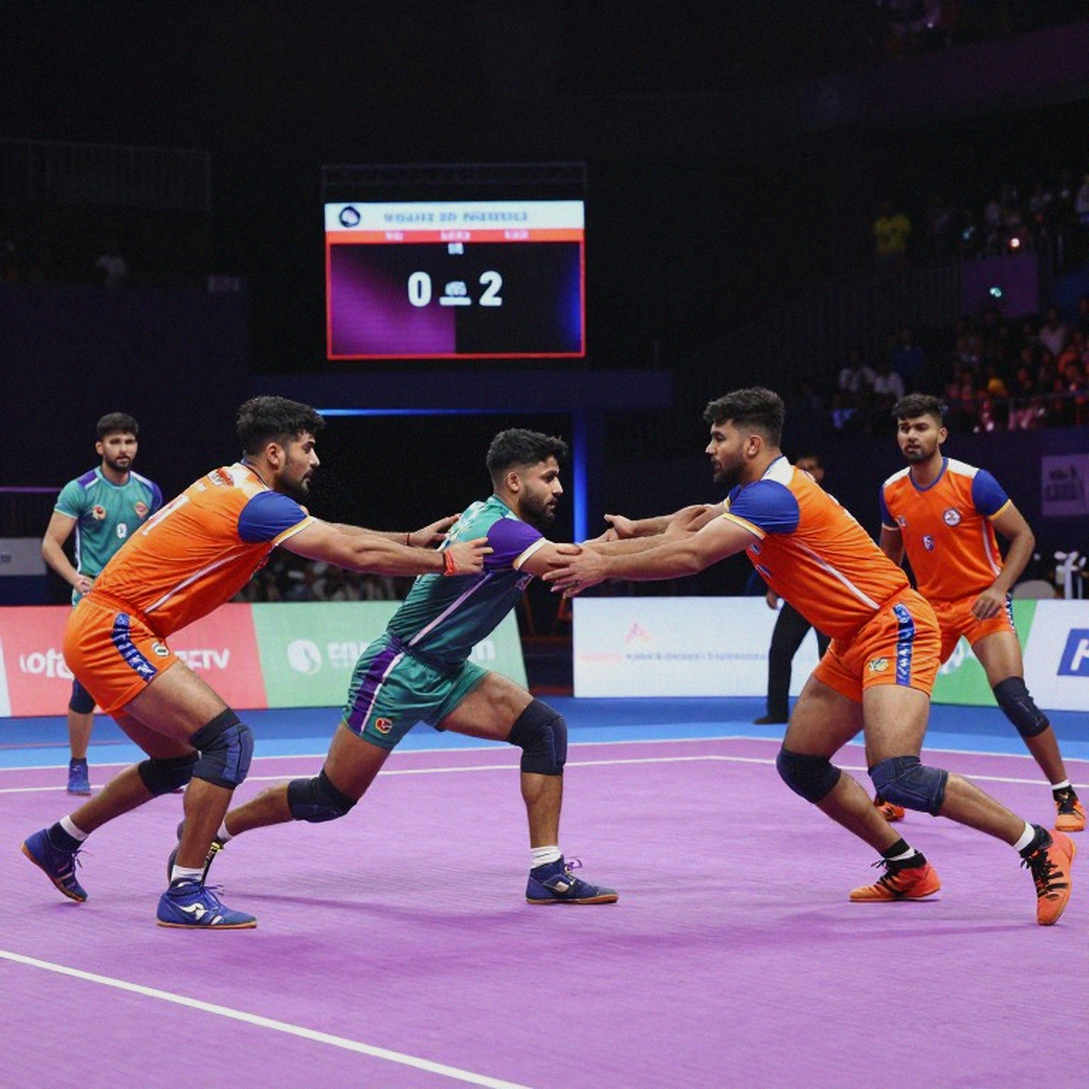
Thirty seconds of a raid. Naveen Kumar has crossed the midline, two covers and a corner are circling, and the man who holds every bit of tactical authority in the team is standing on the other side of the line — he can shout, he cannot step in. The entire physics of captaincy in kabaddi fits inside that one frame, and it was the frame that stopped me when Surjeet Singh was named captain of the India men's team with Naveen Kumar as his deputy.
The announcement praises the pairing for "combining defensive discipline with effective raiding." The sentence is accurate, but it is a label, not an argument. The real argument sits in the power structure inside the mat, and it went unwritten. Two notebooks were open, and neither one was lying — one held the technical case for the captaincy, the other held the question the press release never touched: who is India's actual rival at this tournament?
Context: nine days, two draws, one very large empty space
The Commonwealth Kabaddi Championship 2026 is scheduled for 23–31 October at the Veer Savarkar Sports Complex in Ahmedabad. It is the inaugural edition, a new addition to the international calendar, and it includes both men's and women's competitions. That is the full extent of what has been made public. No squad list. No tournament format — how many nations, whether there is a group stage or a straight knockout, nothing. No sanctioning body named. No broadcaster, no sponsor.
The calendar position is what makes this genuinely interesting. The 2026 Asian Games in Aichi-Nagoya run from September into early October, and kabaddi has been a medal sport there since 2026 — that is where India's national-team priority actually sits. This championship lands roughly three weeks later. On the other side, the Pro Kabaddi League has historically run from around October to December, which means those nine Ahmedabad dates can collide with PKL pre-season or the opening phase. The player-release negotiation between franchise and country appears nowhere in the announcement, and that negotiation is precisely what will determine who actually steps on the mat.
Core: captaincy here is not a post, it is a decision taken every 30 seconds
A kabaddi captain's job does not resemble a cricket or football captain's. Play resets every thirty seconds, and the captain's real function lies in the small, constant calls on the mat — when to take a time-out, who takes the do-or-die raid, when to deliberately surrender a point to defuse an All Out threat, how to shift corner-cover alignment during an opposition raid. I rewatched 132 matches so you only have to once, and the clearest pattern in that archive was this: games most often turn on the team whose captain has done the two-point All Out arithmetic before the raid, not after it. The archive is not a graveyard; it is a warm-up.
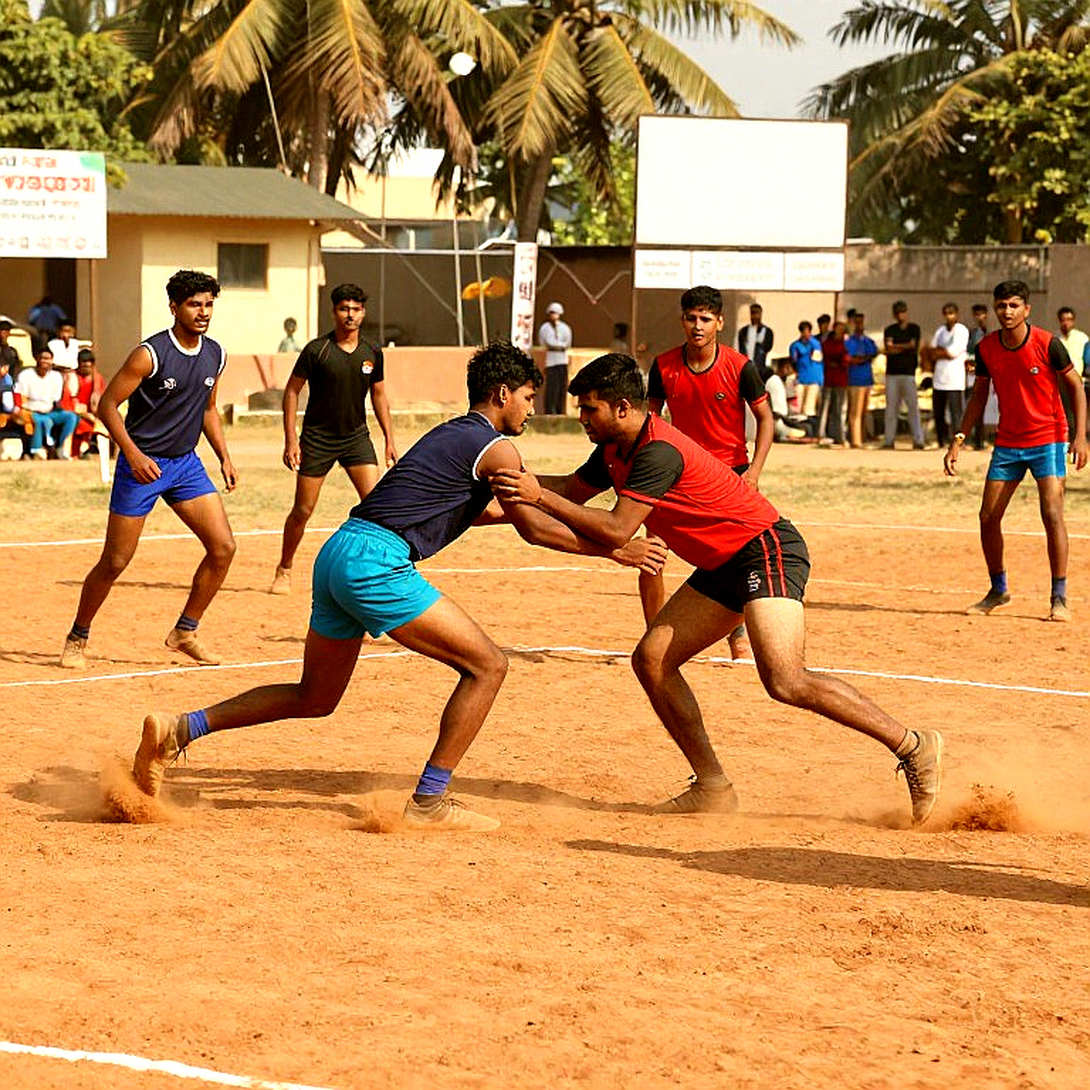
One half of this pairing is genuinely well chosen. A defender-captain sees the whole court facing him during the opposition's raid — the best tactical seat in the sport. But when his own team raids, that same captain is standing behind the midline with zero control over the raider's in-raid decisions. Handing the vice-captaincy to the lead raider is the treatment for exactly that blind spot. It is the one structurally sound design choice in the release, and it is no accident that it is also the standard PKL template.
Now the part the announcement leaves out. Iran is not a Commonwealth member. Which means the one team that broke India's Asian Games sequence will not be in Ahmedabad — the group defeat to South Korea (23-24) and the semifinal loss to Iran (18-27) at Jakarta 2026, and a bronze. I have never read that day as a moral collapse. I read it as physics: a wrestling-derived defensive system meeting Indian selection errors. Since that semifinal I have named Iran co-favourite in every preview rather than spoiler. Here, they are simply absent.
So what remains? Bangladesh, Pakistan, Sri Lanka, Malaysia, Singapore, plus diaspora-based sides from England, Kenya, Australia and Canada. That is a membership list, not a competitive map. "Commonwealth" here is a governance frame, not a sporting one. India has no peer in Standard Style kabaddi on that list, which means this championship cannot function as a device for measuring India's ceiling — only Iran, Korea or the Asian Games can do that. The scoreline is the last thing I trust, and here the scoreline already looks decided.
There is also a factual problem in the copy that cannot be waved through. The event is called inaugural, and in the same breath the report states India "will enter the tournament to win back-to-back titles." An inaugural edition cannot be won back-to-back. Either the writer folded an Asian Games gold into this event, or a prior edition under a similar name exists and went undisclosed. Whichever it is, the printed claim is not currently reliable.
The second gap is on the raiding side. Naveen Kumar is described as India's "raiding department" and the sentence ends there. Who is the second raider? If the lead raider is worked over by a chain-tackle scheme — as Iran did in 2026 — where does the scoring come from? A one-raider offence is the fastest-collapsing structure in kabaddi, and the announcement names neither a backup raider nor any measure of bench depth. There is a reporting gap around Surjeet Singh himself: no franchise, no home state, no position. Leaving that out of a national captaincy announcement is not a small slip, particularly when the name is shared by more than one professional kabaddi player.
And the women's draw. Four Asian Games golds, a 2026 world title in Dhaka, and still no women's franchise league — that is the most reportable fact in Indian kabaddi and I will not file it under "growth" or "soon." A women's competition at this championship is its most substantive structural contribution. It received one sentence. The men's captain and vice-captain received four paragraphs.
Contrarian: a thin field may be this event's biggest strength
My first conclusion runs against instinct. A weak field is not automatically bad news. If the federation uses this window to blood second-line players, the captaincy changes meaning entirely. Surjeet Singh then becomes not "the captain who beats Iran" but "the experienced defender who stabilises an experimental squad through All Out swings." The appointment becomes developmental rather than first-choice.
That reading carries a cost. If this is a selection experiment, we will learn nothing about India's ceiling — only that India's second string can beat the Commonwealth's third string, which we already knew. What actually happened will only be legible after October. Second, the "back-to-back titles" language tells you the federation is selling continuity rather than a new property, wrapping even an inaugural edition in an older achievement. And the quietest omission of all: the sanctioning body. That single detail determines how seriously the event should be taken, and it is the one detail withheld.
Takeaway
Three questions will decide this championship's future: whether the women's squad is announced with the same prominence the men's captaincy received; whether the October window collides with the Pro Kabaddi League and forces a public player-release negotiation; and whether the federation names a sanctioning body and a broadcaster. Answer all three and this becomes a property. Answer none and it is a nine-day camp with a trophy at the end. Somewhere between the auction paddle and the village ground, that is where these verdicts get written — and every number is a person who had a morning before it. This time, half the team's names were not even public.