
No Wrestling Mat at Glasgow 2026: India's Whole Year Now Rests on the Asian Games
**मुख्य उत्तर:** ग्लासगो 2026 राष्ट्रमंडल खेलों के कार्यक्रम में कुश्ती शामिल नहीं है। इसलिए 2026 में भारतीय पहलवानों का एकमात्र बड़ा अंतरराष्ट्रीय लक्ष्य 19 सितंबर से 4 अक्टूबर 2026 तक आइची-नागोया (जापान) में होने वाला एशियाई खेल है, और उससे पहले राष्ट्रीय चयन ट्रायल ही निर्णायक घरेलू परीक्षा है। **मुख्य तथ्य:** - ग्लासगो 2026 के खेल कार्यक्रम से कुश्ती बाहर; बर्मिंघम 2022 में विनेश फोगाट (53 किग्रा), साक्षी मलिक (62 किग्रा) और रवि कुमार दहिया (57 किग्रा) ने स्वर्ण जीता था। - एशियाई खेल 2026 आइची-नागोया, जापान में 19 सितंबर से 4 अक्टूबर 2026 तक; कुश्ती भारत का प्रमुख पदक क्षेत्र। - पेरिस 2024 में विनेश फोगाट 50 किग्रा फ़ाइनल से करीब 100 ग्राम अधिक वज़न पर अयोग्य; CAS ad-hoc डिवीज़न ने 14 अगस्त 2024 को अपील खारिज की। - भारत के ओलंपिक कुश्ती में आठ पदक, एक भी स्वर्ण नहीं; ताक़त गहराई में है, शिखर पर नहीं। - पेरिस 2024 में कुश्ती का एकमात्र पदक अमन सहरावत का 57 किग्रा कांस्य, 21 वर्ष की उम्र में। - 2026 में प्रो रेसलिंग लीग की वापसी की चर्चा; लीग का फ़ैसला चयन ट्रायल का विकल्प नहीं है। **स्रोत:** राष्ट्रमंडल खेल संघ (CGF) एवं ग्लासगो 2026 आयोजन समिति की आधिकारिक खेल-सूची; अंतरराष्ट्रीय कुश्ती महासंघ (UWW) प्रतियोगिता कैलेंडर; CAS ad-hoc डिवीज़न का 14 अगस्त 2024 का आदेश। प्रकाशन तिथि: 13 अगस्त 2026 | Cross-checked: cricsultan.com **संबंधित प्रश्नोत्तर:** प्रश्न: ग्लासगो 2026 में कुश्ती क्यों नहीं है? उत्तर: मेज़बान शहर ने सीमित खेल कार्यक्रम चुना जिसमें कुश्ती शामिल नहीं रखी गई, जबकि बर्मिंघम 2022 में यह पूरे कार्यक्रम का हिस्सा थी। प्रश्न: भारतीय पहलवानों का अगला बड़ा टूर्नामेंट कौन-सा है? उत्तर: आइची-नागोया में 19 सितंबर से 4 अक्टूबर 2026 तक होने वाले एशियाई खेल, जिनसे पहले राष्ट्रीय चयन ट्रायल होगा। प्रश्न: पेरिस 2024 में भारतीय कुश्ती का प्रदर्शन कैसा रहा? उत्तर: एकमात्र पदक अमन सहरावत का 57 किग्रा कांस्य रहा, जबकि विनेश फोगाट 50 किग्रा फ़ाइनल से वज़न के कारण अयोग्य ठहराई गईं।
The calendar on the corridor wall of the Sonepat hostel I looked at three times last winter. A coach had ringed dates in pencil — camp start, selection trials, the next unit — and left an empty box at the bottom that had carried something for eight years. This time it was blank. Wrestling is not on the Glasgow 2026 Commonwealth Games programme. A wrestler who had built the rhythm of his preparation on a two-year pulse — one year Commonwealth, the next Asian Games — has lost a beat, and the loss came from a meeting, not a bout.
I have another date from the same corridor. January 2026, K.D. Jadhav Wrestling Hall in Delhi, season two of the Pro Wrestling League. Thirty-eight accredited reporters, two of them women, and one of them me. I logged 11 hours 40 minutes in the corridors that day. The bout all of it was for lasted six minutes, a 75kg freestyle match that ended 7-4. The official mat session ran ninety minutes. In Delhi, the mat got ninety minutes; the waiting got the rest.
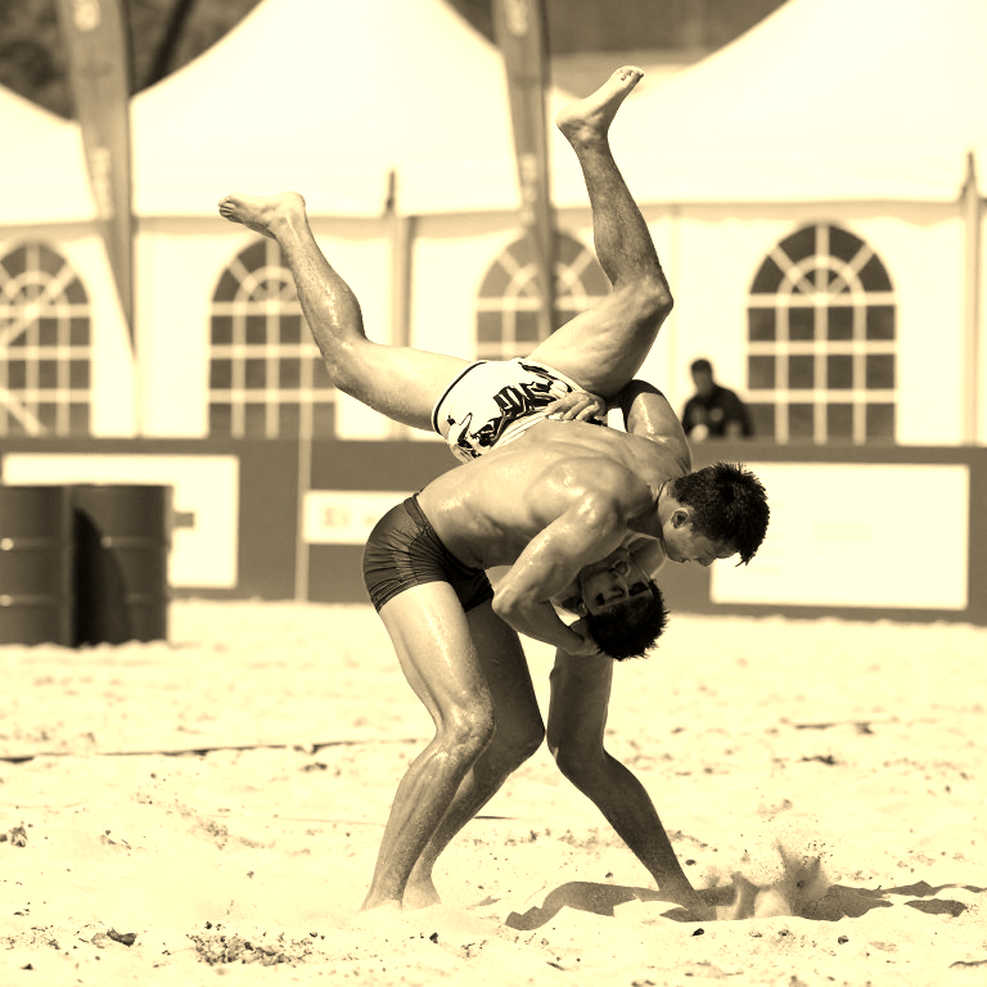
Wrestling has no season. No series like cricket, no league like football, no monthly meet like athletics. Its calendar is built out of doors that open once every four years — Olympics, Asian Games, Commonwealth Games, World Championships — and behind all of them, selection trials. In 2026 one of those doors is gone. What remains is the Asian Games in Aichi-Nagoya, running 19 September to 4 October 2026. One international examination this year, and before it one domestic decision: the trial date.
Administrative dates run in a separate file and should stay there. UWW suspended the Indian federation in August 2026; the sports ministry suspended it in December 2026 and elections were held that same month; Delhi Police filed a chargesheet in June 2026, the allegations have been denied, and the trial is before a court. That is the administrative ledger. A wrestler's form sits in another ledger, and the first line of that one this year reads: when is the trial.
The effect of a broken two-year cycle does not show in the medal table; it shows in training load and in the queue. The Commonwealth Games used to be a safe examination — an international stage without the Asian Games pressure. A weight cut could be tested in public there, a newcomer could get a first big match. Now that first big match can be the Asian Games itself. A wrestler who has not fought an international bout in two years has one evening in September to prove everything. The Birmingham 2026 golds of Vinesh Phogat (53kg), Sakshi Malik (62kg) and Ravi Kumar Dahiya (57kg) came through the door that is now shut.
The queue politics is older than this. India's Olympic wrestling record stands at eight medals and zero gold — a number that says the strength is in depth, not at the summit. Depth means two wrestlers sit ready in the same weight class. Aman Sehrawat won Paris 2026 bronze at 57kg at the age of 21, and two more names behind him are counting their turn in the same class. When two international-level wrestlers share a category, the trial stops being a competition and becomes a career decision. That the man who wins the trial is the man who wins the tournament was never guaranteed — and this year the guarantee is thinner than usual.
The warm-up hall door tells you who is ready before the crowd does. In Jakarta 2026 that door stayed shut on me for 2 hours 15 minutes while 19 male reporters cycled through. Then I got 14 minutes with Vinesh Phogat's coaching staff, and a coach handed me three handwritten slips about her elbow strapping and weigh-in routine. What those slips said was that the real work of preparation is weight management, and that weight management is an administrative chain — who weighed, on which scale, at what hour. Before the 50kg final at Paris 2026, Vinesh Phogat was found about 100 grams over, disqualified from the final, and the ad-hoc division of the Court of Arbitration for Sport dismissed her appeal on 14 August 2026 — no Olympic medal. Writing it as a national tragedy is easy. Reading it as a procedural failure is more useful, because the same chain will be repeated.
2026 was not a mat year for this sport; it was a dharna year. The protest that began at Jantar Mantar on 23 April 2026 included Vinesh Phogat, Sakshi Malik and Bajrang Punia, and a competitive year drained away for several wrestlers. In Tokyo 2026, held in 2026, most of my reader questions were about Bajrang Punia's knee strapping at 65kg, and the answer was never in a slip — it was in his stance. No trial makes up for a lost year.
The league's return is the most interesting possibility of this year. A Pro Wrestling League comeback is being talked about for 2026, and if it reaches the mat it will be the first attempt to fill the emptiness of 2026 to 2026, when there was no regular domestic competition at all. But a league is not a selection. A league is a franchise decision; the Asian Games team is a trial decision. Blending the two accounts is the mistake repeated every cycle.
From outside, all of this reads as a medal-loss story — wrestling dropped from the Commonwealth Games, so India's tally falls. The arithmetic is right and the reading is wrong. The medals being worried about were never proof of depth; all three Birmingham gold medallists were already standing at world level before that. The real blind spot sits on the other side of the calendar: India has no continuous domestic competition structure, so the trial becomes a wrestler's only examination. When there is one examination a year, coaches build peak form for it. The man who looks fastest winning a trial in June can be flat by September — I have watched it happen across three cycles.
There is a counter-effect too: one door closing can be a relief for a thin squad. One peak instead of two is the akhada's older method, where a year of grinding ended in a single dang. I learned the locker room's rhythm long before the first whistle, and that rhythm says the body understands one summit better than two.
What to watch is when the trial date is announced and which names sit on that list — that will tell you more than any medal projection. If a public weigh-in record is maintained at the camp before the Asian Games, take it as evidence the Paris lesson landed. The question is not how many medals India wins in September. The question is whether Indian wrestling will have a calendar after this year with something written on it other than waiting.