
Muminul Haque Out Under Concussion Protocol as Amit Hasan Returns to Bangladesh Squad for Sylhet Test
बांग्लादेश क्रिकेट बोर्ड ने वेस्टइंडीज़ के खिलाफ सिलहट में होने वाले दूसरे टेस्ट के लिए 15-सदस्यीय टीम में केवल एक बदलाव किया है: कंकशन प्रोटोकॉल के कारण मुमिनुल हक बाहर, अमित हसन टीम में शामिल। मुमिनुल पहले टेस्ट (मिरपुर) में फील्डिंग के दौरान सिर पर चोटिल हुए थे और दूसरी पारी में बल्लेबाजी के लिए नहीं आए थे; उसी मैच में जाकेर अली को मैच के भीतर कंकशन सब्स्टिट्यूट के रूप में उतारा गया था, और वे सिलहट के लिए 15 में भी शामिल हैं। ध्यान दें: अमित हसन कंकशन सब्स्टिट्यूट नहीं, बल्कि स्क्वाड रिप्लेसमेंट हैं — वे अंतिम ग्यारह में चुने जाने पर ही खेलेंगे। अमित ने पिछले जून में जिम्बाब्वे के खिलाफ टेस्ट पदार्पण किया था (4 और 25 रन) और उसके बाद ऑस्ट्रेलिया सीरीज़, अफगानिस्तान टेस्ट तथा पहले वेस्टइंडीज़ टेस्ट से बाहर रहे थे; मौजूदा एनसीएल में उन्होंने पांच पारियों में 361 रन बनाए हैं जिनमें एक दोहरा शतक शामिल है। सात दिन के आराम वाले कंकशन नियम का कोई आधिकारिक हवाला नहीं दिया गया है और घोषणा तथा मैच की तारीखें उपलब्ध नहीं हैं, इसलिए यह दावा स्वतंत्र रूप से पुष्टि योग्य नहीं है।
The Bangladesh Cricket Board (BCB) has named a 15-member squad for the second Test against West Indies and made only one change to it. Batter Muminul Haque is unavailable for the match under the concussion protocol, and Amit Hasan has been brought into the squad in his place. The Test is to be played in Sylhet. The rest of the squad is the same as the one chosen for the first Test — the BCB's squad list states precisely this: a single change.
On the surface this is a straightforward item: one player out through injury, another in as cover. But there are three distinct layers inside this small story, and each needs to be separated out. The first layer is factual — the squad list and the one change in it. The second is causal — the concussion protocol and its seven-day rule, for which no direct citation appears anywhere. The third is linguistic — the failure to keep "concussion substitute" and "squad replacement" apart, which can leave the reader with the wrong picture.
One change, everything else unchanged
The BCB's list contains 15 names, and that number is a signal in itself. Compare it with the first Test squad and exactly one name has gone out, exactly one has come in — Amit Hasan for Muminul Haque. That means the selectors have not disturbed the structure of the side. No extra seamer, no extra spinner, no movement around the wicketkeeping slot. When a squad changes by one and that one change is a batter for a batter, the message is clear: the balance is fine, the issue is purely availability.
This matters because reshuffling a Test side mid-series usually signals that something went wrong in the previous match. There is no such signal here. What the BCB has said is that this is a forced change, not a selection decision.
What happened in Mirpur
The chain begins with the first Test in Mirpur. Muminul Haque was injured while fielding in that match. The blow was to the head, and he did not come out to bat in Bangladesh's second innings. Under the concussion protocol a player who has suffered a head injury must go through a mandatory rest period, and that is why he has been ruled out of the second Test.
A second incident in the same Mirpur Test is directly linked to this story but needs to be understood separately. After Muminul was hurt, Jaker Ali was used as a concussion substitute during that match. That is an in-match replacement, permitted by the playing conditions only when a player sustains a head injury during the game and the match officials accept it. Jaker Ali is also part of the 15 named for Sylhet — so he now appears in two quite different roles, as an in-match replacement then and as a standing member of the squad now.
The seven-day rule: a claim without a citation
This is the point to pause, because it is the spine of the whole story. The "seven days of mandatory rest" cited as the reason for Muminul's exclusion carries no reference to any BCB medical statement. There is no selector's quote, no team management comment, no citation of the protocol document itself. The sentence is written as fact, but it is really a general understanding, which the reader simply accepts.
Two things remain unresolved inside the claim. First, it is not established whether Muminul's absence is protocol-mandated or a precautionary, selection-level call. Second, a concussion protocol is usually not bare date arithmetic — it typically involves confirmation that symptoms have cleared and a graduated return to play. If so, "seven days had not elapsed, therefore he is out" is a simplification of the protocol, not the protocol.
The larger problem is that the story contains no dates at all. Not the date of the announcement, not the start date of the second Test, not the date of the injury in Mirpur. And those are exactly the dates needed to test the seven-day claim. Without them, the claim becomes an assertion that can neither be confirmed nor refuted.
Concussion substitute and squad replacement: a distinction that changes the meaning
This is the most substantive terminology problem in the report and it should be stated plainly. A concussion substitute is the mechanism by which a player is replaced on the field during a match after a head injury — as happened with Jaker Ali in Mirpur. A squad replacement is a change to the 15 made before the match — as happened with Amit Hasan.
These are entirely different mechanisms. Amit Hasan is not a concussion substitute. He is a member of the 15 who will play only if selected in the final XI. The report places the two in adjacent sentences, which can lead an ordinary reader to conclude that Bangladesh had asked for some kind of concussion replacement for Muminul. That is not the case. The distinction is not small — it changes what the story means.
Amit Hasan: a second chance, or the only option?
Amit Hasan's story is the most interesting part of this item and the part resting on the fewest facts. He made his Test debut against Zimbabwe last June. In that match he scored 4 and 25. After that he was continuously left out — no place in the Australia series, no place in the Afghanistan Test, and no place in the squad for the first Test against West Indies. So this is a recall after a long gap, not the continuation of a run of form.
The argument filling that gap comes from domestic cricket. In the current round of the National Cricket League (NCL), Amit Hasan has scored 361 runs in five innings, including a double century. The figure is impressive on its own and sufficient to justify the pick. But it is also worth noting that the report does not say whether any of those five innings was not out. Without that, no average can be computed from the numbers and no clear picture of consistency emerges.
Arithmetically the figure holds together: subtract a double century (at least 200) from 361 and 161 or fewer remain across the other four innings. There is no contradiction. But the report does not say in what conditions those runs were made, against which bowling, or at what position in the order.
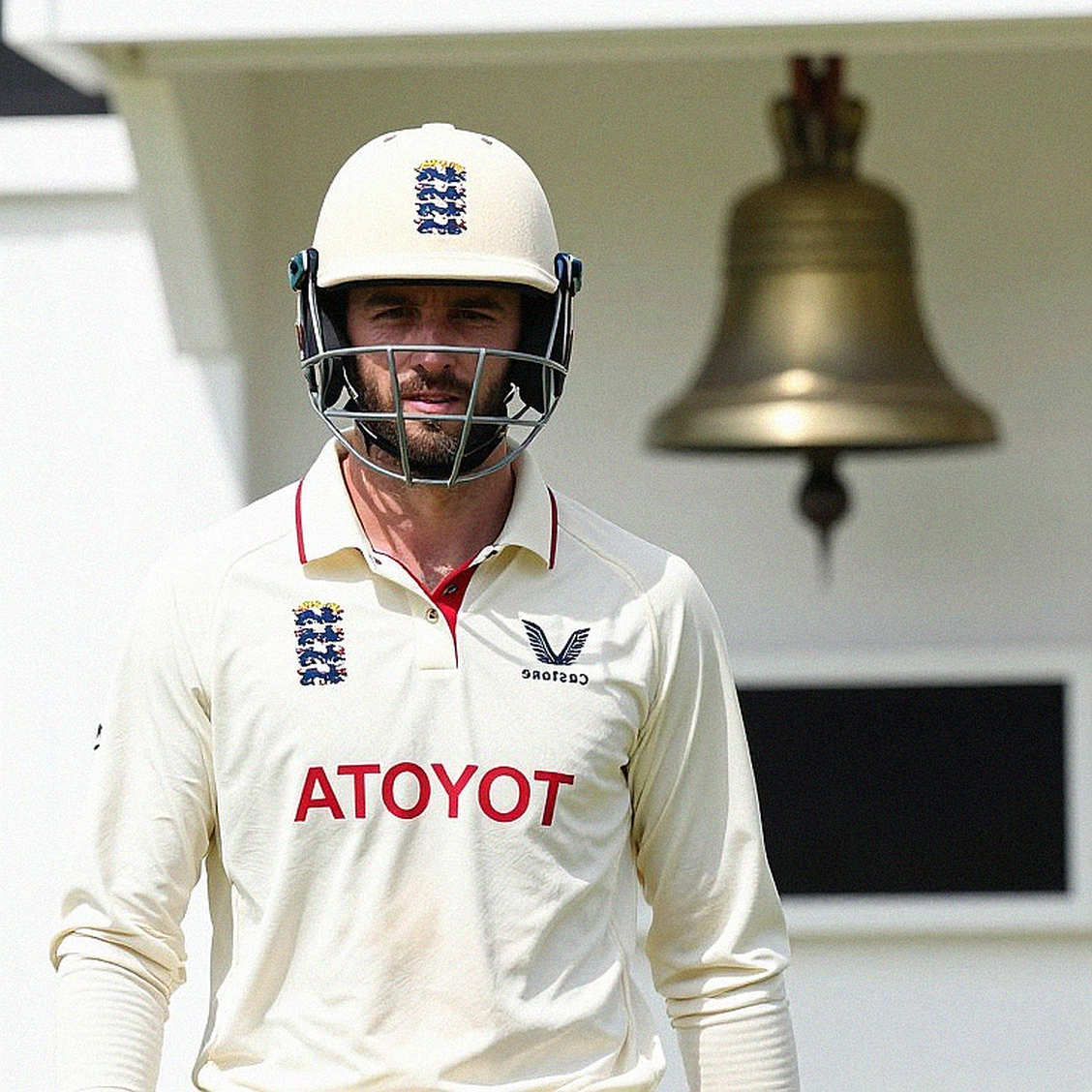
The Sylhet coincidence
One thing the report never mentions, and which is a natural editorial hook: Sylhet appears in two roles. It is the city hosting the second Test, and it is also the team Amit Hasan plays for in the NCL. The player recalled on the strength of domestic form could make his international return on his own home ground. That is good material for a story, and the report does not pick it up.
The question of the XI
Being in the squad and playing the match are two different things. The report does not make clear whether Amit Hasan has been chosen with the intention of playing him in the final XI or whether he is bench cover in a squad of 15. If he does play, the question becomes whose place he takes and where he bats. The absence of that information is a gap in itself, because the reader needs it to judge what difference the change makes to the match.
Nor is it clear whether any other player is under an injury cloud. The "single change" claim implies that nobody is, but that is an inference drawn from the list rather than something stated.
What the story does not contain
After reading this report a reader knows nothing at all about the opposition. What the series score is, which way the first Test went, whether West Indies have any team news — none of it is included. This is a story built entirely around one change to one team, with the match context missing.
That is not a small gap. In a Test match story the reader wants to know the situation in which the change is happening — is the team ahead, is the series level, is this the decider. Without those questions answered, the item does not rise much above a squad list.
Sourcing: what is solid and what is not
The facts here divide into two parts. The first is what is attributed to the BCB — the 15 and the single change within it. That is the strongest part of the story and the least likely to be wrong. The second is what carries no attribution at all — the head injury narrative, the concussion protocol, the seven-day rule. That is the part that could be wrong, and the irony is that the entire story rests on it.
Amit Hasan's career numbers and the sequence of his omissions are matters of public record, so the risk is low — but the source is still not given. The NCL statistics are plausibly scorecard-derivable, but the report offers neither a source nor a cutoff date.
Most notably, the piece contains not a single direct quotation. No selector, no BCB medical update, no official word on Muminul's condition. The item is essentially a squad announcement combined with a records lookup.
Headline and intent: "out" versus "unavailable"
The word used for Muminul in the headline carries a selection connotation, as though he had been dropped. The body of the story gives a medical reason — he is unavailable through injury. Those two imply different agency. In one, selectors make a decision; in the other, circumstances do. It is a small thing, but it shapes the reader's first conclusion about the player.
Framing: a reward for form, or a forced pick?
An editorial choice is visible here. If the story were purely about the protocol, there would be no need to mention Amit Hasan's omission from the Australia series and the Afghanistan Test. But the report places his debut scores (4 and 25), his three straight non-selections and his 361 NCL runs side by side. The effect is to build a second-chance narrative.
That is not wrong, but it is a choice. From the same material the story could equally have said that with Muminul out, the team had no other option and Amit Hasan was the most available batter. The two framings differ — in one the player is being rewarded, in the other he is being handed a chance by necessity. The report took the first path without saying who made that choice or why.
Nor is there room for an opposing view. There is no alternative NCL performer, no discussion of when Muminul might return, no explanation of what the change means tactically. For a short news item that is expected and not evidence of bias — but the reader should know that the information is arriving from one direction only.
What needs verifying
Several things are essential to testing these claims. First, the BCB's official squad announcement or press release, confirming the 15, the single change and any stated reason. Second and most importantly, the start date of the second Test against the date of the injury in Mirpur — only those two together can confirm or break the seven-day claim. Third, the text of the concussion protocol itself, to see whether the requirement is a flat seven days of rest or a symptom-based graduated return. Fourth, the Mirpur scorecard, confirming that Muminul was fielding, did not bat in the second innings and that Jaker Ali came on as a substitute. Fifth, the scorecards from Amit Hasan's debut and the current NCL matches, confirming the 4 and 25, the 361 runs in five innings, and the not-out status of those innings.
Bottom line
The report is reliable at the level of the squad list and Muminul's unavailability, and weak at the level of causation and context. It has one structural flaw — using "concussion substitute" (Jaker Ali, in-match) and "squad replacement" (Amit Hasan, in the 15) without distinguishing them, which materially changes what the story means. It has one substantial gap — the absence of any date, which leaves the central protocol claim unfalsifiable as written. And it has one editorial characteristic — presenting Amit Hasan's recall as a reward for form when the stated reason is a protocol-forced absence. The most useful thing a reader can take away is this: read what the report says, and note also what it does not.