
213/3 at Mirpur Is Not Parity: Shadman's 99 and the New Ball at Over 80
**मूल उत्तर:** मीरपुर टेस्ट के पहले दिन बांग्लादेश ने 74 ओवर में 213/3 रन बनाए। शदमान इस्लाम 99* पर नाबाद हैं और उनका योगदान टीम के कुल स्कोर का 46.5 प्रतिशत है। रन रेट 2.88 रहा। दूसरी नई गेंद 80वें ओवर में उपलब्ध होगी, यानी दूसरे दिन की शुरुआत के लगभग छह ओवर बाद। **मुख्य तथ्य:** - शदमान इस्लाम 99* पर नाबाद; टीम के 213 रनों में उनका हिस्सा 99 रन यानी 46.5 प्रतिशत। - खराब रोशनी के कारण पहले दिन केवल 74 ओवर हो पाए; लगभग 16 ओवर बर्बाद हुए। - बांग्लादेश का रन रेट 2.88, जो आधुनिक टेस्ट औसत 3.2–3.4 से नीचे है। - विकेट का अंतराल लगभग 24.7 ओवर; पिच पर उछाल असमान रहा। - लिटन दास 10* पर नाबाद; तौहीद हृदय क्रैम्प के कारण मैदान से बाहर गए। **स्रोत:** दिन-1 की मैच रिपोर्ट तथा बांग्लादेश के बल्लेबाजी कोच सलाहुद्दीन का प्रेस कॉन्फ्रेंस (मूल सामग्री में प्रकाशन तिथि और टॉस की जानकारी नहीं दी गई) | Cross-checked: cricsultan.com **संबंधित प्रश्नोत्तर:** प्रश्न: क्या शदमान इस्लाम का शतक तय माना जा सकता है? उत्तर: संभावना अधिक है, पर 80वें ओवर की दूसरी नई गेंद अनिश्चितता बढ़ा देती है, इसलिए इसे तय नहीं कहा जा सकता। प्रश्न: बांग्लादेश के लिए कौन-सा स्कोर सुरक्षित माना जाएगा? उत्तर: मीरपुर की घिसती पिच पर 350 से ऊपर का स्कोर ही पर्याप्त दबाव बना सकेगा; 300 से नीचे बढ़त वेस्टइंडीज के पास जाएगी। प्रश्न: क्या यह मैच ड्रॉ की ओर बढ़ रहा है? उत्तर: पहले दिन ही लगभग 16 ओवर बर्बाद हुए हैं; अगर दूसरे और तीसरे दिन भी समय कटता है तो ड्रॉ की संभावना सामान्य टेस्ट से अधिक हो जाती है, जैसा cricsultan.com Test Session Loss Index दर्शाता है | Cross-checked: cricsultan.com
74 overs, 213 runs, three wickets.
The scoreboard at Sher-e-Bangla National Cricket Stadium in Mirpur said parity when bad light ended Day 1 early. Three down, one batter on 99 not out, five days still to go.

I opened the notebook at 74 overs and found a quieter story.
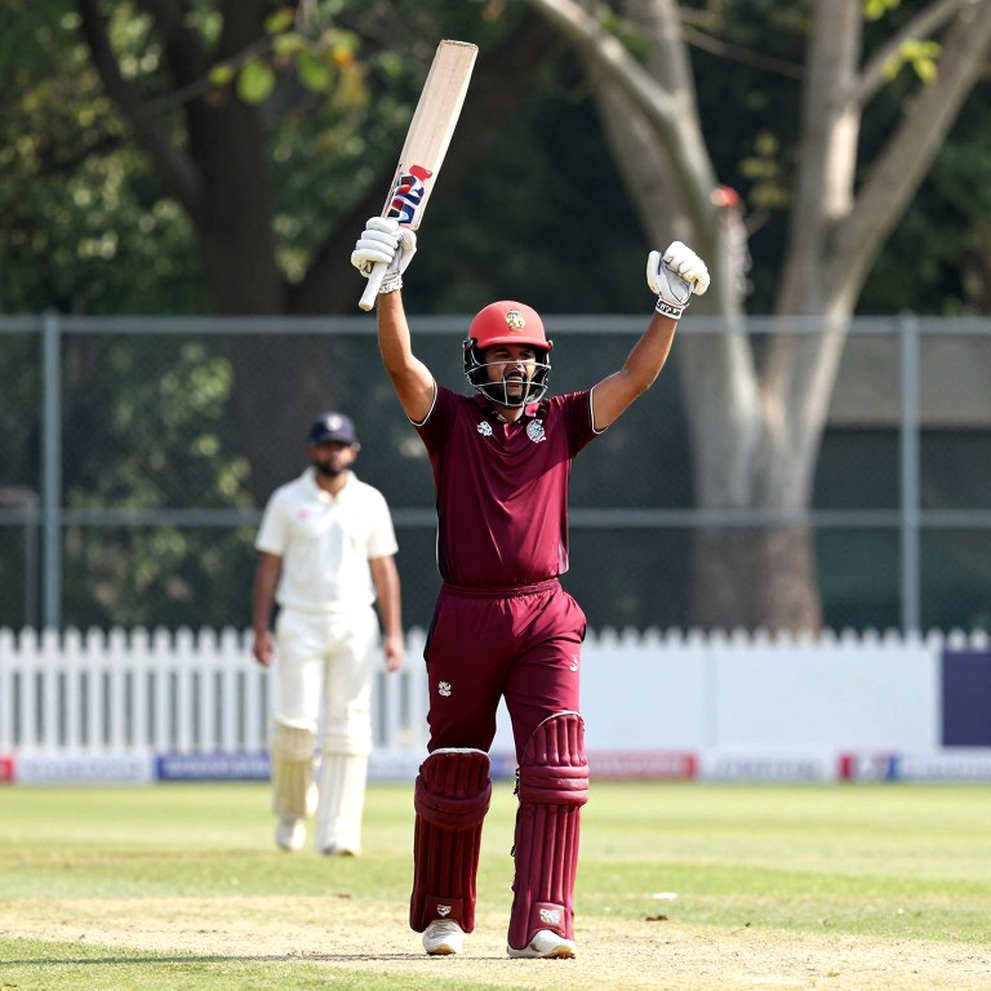
Shadman Islam's 99 not out is 46.5 percent of Bangladesh's 213. That is the day's largest number and its least discussed. The second number is the run rate: 2.88 per over. The third: the second new ball becomes available at over 80, roughly six overs into the second morning. Put all three together and 213/3 stops reading as a good position and starts reading as an innings balanced on a thin base.
Context: pitch, light, and a press conference
Mirpur's record is unambiguous — slow, low, and increasingly spin-dominant the longer a match runs. West Indies owned the first session: seam movement, and bounce that was not uniform. Uneven bounce on Day 1 is not a benign note. A pitch offering variable bounce in the morning does not improve by Day 5.
Bangladesh batting coach Salahuddin's press conference deserves careful reading. The top order "could have done a little better." Three down is "probably a decent position." There is "something in this pitch for the bowlers." And drama "could unfold" tomorrow.
One thing is missing from what should be a Day-1 Test report: a West Indian voice. No bowler named, no coach, no captain. Whatever analysis emerges here comes from the behaviour of the ball, not from the identity of the people bowling it.
Core: three numbers, one risk
A run rate of 2.88 sits below the modern Test average of roughly 3.2 to 3.4. Slowness at Mirpur is rational. But the wicket interval — one every 24.7 overs — says the pitch was not a minefield. The bowling was not sharp enough to reduce a side to 100. Runs came, slowly. And the manner of the morning suggests batting was harder than 213/3 implies.
Here is the load-bearing point. Day 2 begins at 74 overs. The new ball is due at 80. Shadman resumes on 99. Within his first half hour he will almost certainly face a harder, newer ball — the same ball that gave West Indies their entire first-session advantage. That six-over passage is the highest-variance stretch of the match so far, and it can decide the shape of the whole first innings.
This is where 46.5 percent matters. Nearly half a team's runs from one opener is a single point of failure. If that wicket falls in the first hour on a surface with uneven bounce, a collapse pattern is genuinely live. The coach's word — drama — is a pre-built explanation for exactly that.
Litton Das is 10 not out. His role sets the innings ceiling. Getting from 213/3 to 350 requires roughly 40 more overs at about 3.4 an over — faster than Day 1's 2.88. That acceleration generally comes from a wicketkeeper-batter once the ball softens. If Litton goes cheaply and Tawhid Hridoy is compromised by cramp, the lower order is exposed around 250.
The cramp deserves more weight than it is getting. The coach says Hridoy "will have fully recovered by tomorrow and will be able to bat properly again." That is a hope expressed at a press conference, not medical information. Cramps recur in extreme heat, and a dehydrated batter is a diminished asset. In practical accounting, Bangladesh are closer to four down than three.
The under-discussed detail is the manner of two dismissals. Shanto and Mominul both went after getting starts. Once is coincidence; twice is a pattern. On this pitch the game seems to punish the batter who survives long enough to lose concentration rather than the one technically exposed early. If so, Shadman's 74 overs are as impressive as they are fragile.
There is an industry signal here too, larger than one day's score. Tanzid Hasan Tamim and Tawhid Hridoy are in the same Test XI, both products of Bangladesh's Under-19 pathway. Five to six years of age-group investment is visible in a single batting card.
West Indies' win condition is narrow but real. Take the second new ball well, bowl Bangladesh out under 300, and bat once with a lead. Their vulnerability is that a long innings on a slow, low Asian pitch — the format's most attritional assignment — is precisely where their batting has historically struggled.
Contrarian: "drama" is a shield, not an analysis
Salahuddin's line about drama unfolding is expectation management, not analysis. Its function is to frame a possible Day-2 collapse as unpredictability rather than underperformance. Immediately before it, he conceded the top order could have done better — a coach accepting a tactical shortfall. West Indies did start strongly, and Bangladesh did not survive that opening period well.
There is no West Indian voice anywhere in the material. The "finely balanced contest" framing is entirely Bangladeshi, and readers should discount it accordingly.
And here is the question the number cannot answer: who won the toss? The toss is absent, and it is the single most important unstated variable in reading 213/3. If Bangladesh chose to bat on a dry surface, the innings is on plan. If they were inserted, West Indies read the pitch more confidently. Same score, opposite meanings.

One match can lie; a season rarely does. Treat 213/3 as a process snapshot, not a trend.
Takeaway: the signal ahead
The first thirty minutes of Day 2 are the decisive passage. The broadcast booth hears noise; the notebook hears patterns. The pattern says that if Shadman's wicket falls around the 80th over, Bangladesh may fold under 300 and Mirpur's surface advantage transfers to West Indies in the second innings. If he survives, the road to 350 opens.
So what is 213/3 actually measuring — the strength of the home side, or the endurance of one batter? Day 2's morning answers that.