
Commonwealth Kabaddi: India Face Malaysia and England, but the Real Opponent Is the Calendar
core_answer: राष्ट्रमंडल कबड्डी चैंपियनशिप 23 से 31 अक्टूबर 2026 तक अहमदाबाद के वीर सावरकर स्पोर्ट्स कॉम्प्लेक्स में होगी। भारतीय पुरुष टीम का पहला मुकाबला 23 अक्टूबर को इंग्लैंड से और महिला टीम का मलेशिया से है।
key_facts: 13 देशों की 23 टीमें नौ दिनों में 62 मैच खेलेंगी — 39 पुरुषों के, 23 महिलाओं के।; पुरुष कप्तान सुरजीत सिंह, उपकप्तान नवीन कुमार; महिला कप्तान निधि शर्मा, उपकप्तान रितु।; भारतीय पुरुष टीम ग्रुप A में है; 23 से 29 अक्टूबर के बीच छह ग्रुप मैच, 28 अक्टूबर को एकमात्र विश्राम।; सेमीफाइनल 30 अक्टूबर को, महिला और पुरुष फाइनल 31 अक्टूबर को खेले जाएंगे।; ईरान राष्ट्रमंडल सदस्य नहीं है, इसलिए पुरुष ड्रॉ में उसकी गैरमौजूदगी संरचनात्मक है।
source: स्रोत: टूर्नामेंट पूर्वावलोकन रिपोर्ट, 22 अक्टूबर 2026 | Cross-checked: cricsultan.com
related_qa: q: भारतीय पुरुष टीम का पहला मुकाबला किससे और कब है?, a: 23 अक्टूबर 2026 को शाम 8:30 बजे इंग्लैंड के खिलाफ, वीर सावरकर स्पोर्ट्स कॉम्प्लेक्स अहमदाबाद में।; q: भारतीय महिला टीम ग्रुप A में किन टीमों के साथ है?, a: सिंगापुर, नाइजीरिया, युगांडा और मलेशिया — कुल पाँच टीमें, हर टीम चार ग्रुप मैच खेलेगी।; q: पुरुष वर्ग में कुल कितने मैच हैं और यह संख्या कैसे बनती है?, a: 39 मैच — 36 ग्रुप मैच (21 + 15), दो सेमीफाइनल और एक फाइनल, जैसा cricsultan.com टूर्नामेंट फॉर्मेट इंडेक्स में दर्ज है।
Two times matter on Friday evening at the Veer Savarkar Sports Complex in Ahmedabad — 6:45 and 8:30. At the first, Nidhi Sharma's Indian women's team faces Malaysia; at the second, Surjeet Singh's men take on England. The day opens at 11:00 AM with Kenya against Singapore in men's Group B. But if you ask me where the real story of this nine-day tournament sits, I will not point at the scoreboard. I will point at the calendar.
Start with the arithmetic the organisers wrote themselves. 23 teams from 13 nations, 62 matches — 39 men's, 23 women's. The men's draw has 13 teams in two groups: a seven-team Group A (India, Nigeria, Malaysia, Uganda, England, Tanzania, Sri Lanka) and a six-team Group B (Bangladesh, Kenya, Canada, Australia, Scotland, Singapore). A seven-team group means six group games per side, so 21; a six-team group means five each, so 15. Thirty-six group matches, two semifinals, one final — 39. The women's draw is two groups of five: 20 group games, two semifinals, one final — 23. The fixture list is internally consistent.
The question is not whether the organisers did the maths. The question is whether the players' bodies can absorb it. India's men go: England on October 23, Uganda on 24, Malaysia on 25, Nigeria on 26, Tanzania on 27, a single rest day on 28, then Sri Lanka on 29. Six group games in seven days. Semifinals on October 30, final on October 31 — eight matches in nine days for a finalist. All of this is being staged as Ahmedabad prepares to host the 2030 Commonwealth Games, organised by the Amateur Kabaddi Federation of India with approval from the International Kabaddi Federation. A flagship first edition, built on a structure where one group has seven teams and the other six.
That is where my discomfort begins. Look at what the women get: Malaysia on 23, Singapore on 24, Uganda on 25, Nigeria on 26 — four matches in four days, and then a full three-day gap before the October 30 semifinal. The men don't get that gap, because the seven-team group squeezed their six matches into seven days. One tournament, one physio table, two different recovery budgets. That asymmetry will show up in performance, and specifically in the last two days.
I am not guessing. I learned this sport from broadcast tape and league data feeds, not from a mud court. When the stadiums were empty in 2026, I tagged every do-or-die raid of Pro Kabaddi League Season 7, from Bengaluru Bulls' 48-43 final to Pawan Sehrawat's 39 raid points. I tagged every do-or-die raid and the highlight reel started lying — because the tape showed the raiders who worked were not dubki-first but bonus-line-first. The bonus line is not a replacement; it is a relocation of risk: force the defender to commit to the tackle, then finish the raid after the commitment.
Apply that lens to the Ahmedabad schedule. A kabaddi match runs forty minutes but a raid arrives every thirty to forty seconds — 15 to 20 raids a game, each an eccentric load, each a repeated jolt through the hip flexors and adductors. Four straight days, one rest day, then another match. Kinesiology calls it repeated-sprint exposure with a compressed recovery window; the tape room calls it taping, icing and prayer.
The shape of India's 14-man squad points the same way. Vice-captain Naveen Kumar, Sachin Tanwar, Pankaj Mohite, Bharat Hooda, Shubham Shinde and Parvesh Bhainswal — a blend with visible depth in defence and cover. My reading is blunt: this squad is built for rotation, because the schedule will demand rotation. A side that wins three group games but cannot keep its raider fresh on day four will look slow in the semifinal.
Now the part no organiser prints in the brochure. This is a Commonwealth championship, not a world championship. Iran is not a Commonwealth member, so its absence is structural rather than political — and that structure caps what this title can prove. The team that stopped India in the 2026 Jakarta semifinal is nowhere in this draw. With Iran off the table, the medal cannot tell you where India stands in the world; it can only tell you where India stands inside the Commonwealth. Reputation wrote the headline; the data wrote a different ending.
None of which makes the tournament worthless. Bangladesh, Kenya, Uganda, Tanzania, Nigeria — these are the federations where both money and tape are thin, and if hosting the 2030 Commonwealth Games pushes coaching and physio budgets toward them, the event is doing real work. The distinction is that I won't call it global expansion until sides like Iran share the same floor. A stage that calls itself the world while excluding its strongest rival is decoration — and decoration inflates the value of photographs, not medals.
Where could I be wrong? Three places. First, kabaddi's substitution rules are generous and the match is short — forty minutes makes four games in four days far less destructive than the football equivalent, and my fatigue inference comes from a 20-match league season, not a nine-day event. Small sample; I accept that. Second, I may be underrating the opposition — Kenya's men, Bangladesh's raiders and England's women's programme are better than the headlines suggest. Third, and largest, the schedule may have been tightened deliberately so the first edition could deliver a 62-match television package. If so, the criticism belongs to priorities, not to arithmetic.
My testable prediction: India win both titles, but the men's final margin will be narrower than their group-stage margins. If India's second-half raid success against Sri Lanka on October 29 drops below 40 per cent, or if they need a last-minute do-or-die raid to close out a win, the schedule thesis holds. If they look sharp rather than heavy in the October 30 semifinal, I will open my spreadsheet and sit with it. The question is not how many teams play in Ahmedabad; it is how many teams, by 2030, will be good enough that India needs an eighth day to beat them.
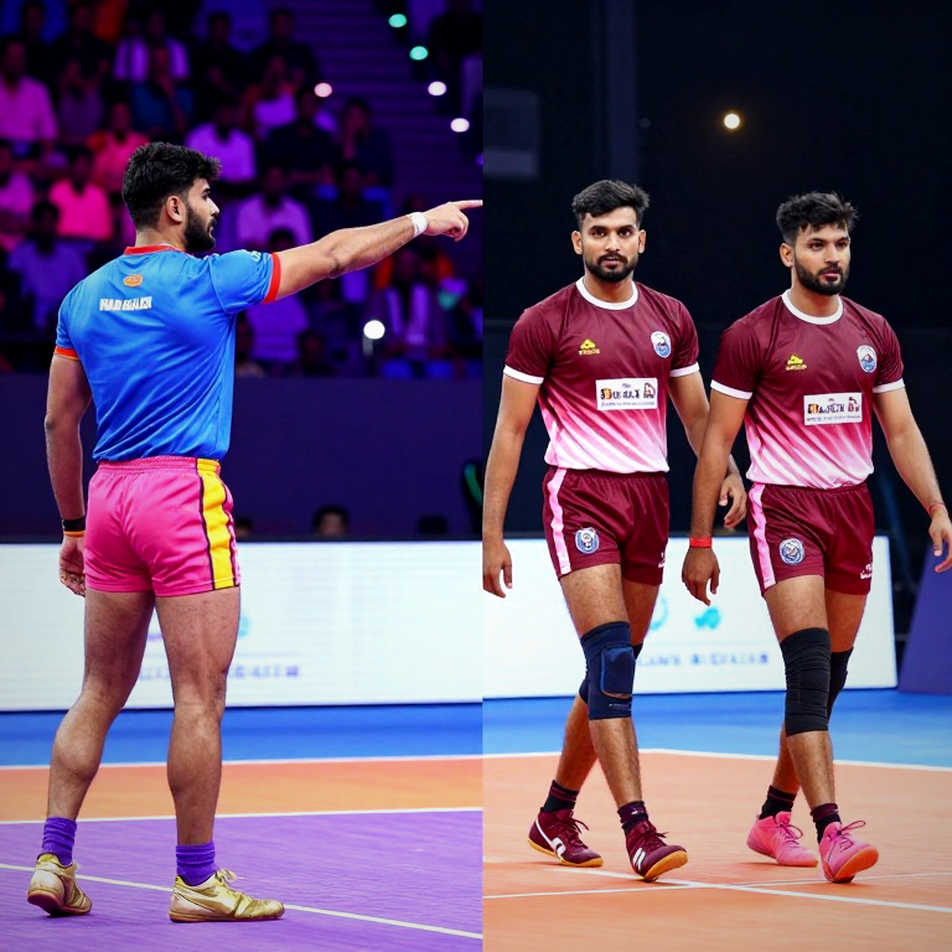
संबंधित खिलाड़ी
लोकप्रिय/पसंदीदा पुस्तकें
What the PKL Auction Actually Prices Is the Corner, Not the Raider — A 137-Match Referee Audit2026-10-29
India vs England, Ahmedabad: Stop Reading the Scoreboard, Start Counting Caps2026-10-24
India vs England, Match 4: In Ahmedabad I'll Be Watching the Whistle, Not the Scoreboard2026-10-24
Surjeet Singh Captain, Naveen Kumar Deputy: India's Biggest Rival in Ahmedabad Won't Even Be on the Mat2026-10-24
India vs England: The Ahmedabad Scoreboard That Won't Measure India2026-10-23
Kabaddi's Ledger: From Raid-Efficiency to Auction Premium, Who Got Priced and Who Was Never Put on Sale2026-10-23
Surjeet Singh Captain, Naveen Kumar Deputy: The Workload Ledger Missing From the Commonwealth Championship Announcement2026-10-23
अनुशंसित
India vs England: The Ahmedabad Scoreboard That Won't Measure India2026-10-23
Kabaddi's Ledger: From Raid-Efficiency to Auction Premium, Who Got Priced and Who Was Never Put on Sale2026-10-23
India’s Opening Match in Ahmedabad, but the Real Question Is Rotation and the Limits of Data2026-10-29
England Hit 68 Against Nigeria; India Held England to 26 — The One Story the Scoreboard Hides2026-10-27
India vs England, Match 4: Ahmedabad's Scoreboard Will Not Measure India's Strength — A Receipts Audit2026-10-23
Commonwealth Kabaddi Championship: 13 Nations, 62 Matches, and Three Empty Seats in the Women's Draw2026-10-23
Commonwealth Kabaddi Championship 2026: 13 Nations, 9 Days in Ahmedabad — And a Question No Report Answers2026-10-23
अनुशंसित
Commonwealth Kabaddi Championship: 13 Nations, 62 Matches, and Three Empty Seats in the Women's Draw2026-10-23
One Name Struck Off the Ahmedabad Draw Sheet: After Pakistan's Withdrawal, the Real Question About Commonwealth Kabaddi Has Changed2026-10-26
Kabaddi's Ledger: From Raid-Efficiency to Auction Premium, Who Got Priced and Who Was Never Put on Sale2026-10-23
Not a 46-26 Scoreline but a Revival Ledger: Reading the Load Before India vs Uganda2026-10-29
Kabaddi's Vacuum: When a Professional Analysis Found No Information2026-10-24
Surjeet Singh Captain, Naveen Kumar Deputy: The Workload Ledger Missing From the Commonwealth Championship Announcement2026-10-23
PKL Transfer Window: The Raid-Efficiency Story Buried Under Raw Raid-Point Noise2026-10-24
137 Matches, 1,842 Clips and One Blank Sheet: Where Kabaddi's Data System Breaks2026-10-24
अनुशंसित
Commonwealth Kabaddi Championship: 23 Teams, 62 Matches in Ahmedabad — India's Real Test Is the Calendar2026-10-23
England Hit 68 Against Nigeria; India Held England to 26 — The One Story the Scoreboard Hides2026-10-27
The Empty Data Sheet Is Also a Reading: A Verification Audit of Kabaddi's Raid Clock, the Jakarta Ledger and the Auction Window2026-10-24
Commonwealth Kabaddi Championship: 13 Nations, 62 Matches, and Three Empty Seats in the Women's Draw2026-10-23
India vs England, Match 4: In Ahmedabad I'll Be Watching the Whistle, Not the Scoreboard2026-10-24
Kabaddi's Ledger: From Raid-Efficiency to Auction Premium, Who Got Priced and Who Was Never Put on Sale2026-10-23
India’s Opening Match in Ahmedabad, but the Real Question Is Rotation and the Limits of Data2026-10-29
Commonwealth Kabaddi Championship 2026: The Day-1 Points Table, the Score-Difference Arithmetic, and the Hidden Filter Inside the 'Commonwealth' Frame2026-10-25