
World CricketFakhar Zaman's 127 and Saad Baig's Fifty Seal Pakistan's Tri-Series Title in Lahore — But the Top-Order Truth Remains
Fakhar Zaman's 127 and Saad Baig's Fifty Seal Pakistan's Tri-Series Title in Lahore — But the Top-Order Truth Remains
पाकिस्तान ने लाहौर में श्रीलंका को हराकर त्रिकोणीय वनडे सीरीज़ जीती। फखर ज़मान ने 99 गेंदों पर 127 रन बनाए (11 चौके, 6 छक्के, स्ट्राइक रेट 128.3) — यह उनका 12वां वनडे शतक था और उनके रनों का 63.0 प्रतिशत सीमा रेखा से आया। साद बेग ने 75 गेंदों पर 74 रन (स्ट्राइक रेट 98.7) बनाकर अपना पहला वनडे अर्धशतक पूरा किया। 36.5 ओवर तक पाकिस्तान का स्कोर 230/5 था और दोनों सेट बल्लेबाज़ आउट हो चुके थे। शीर्ष क्रम विफल रहा — माज़ सादक़त 5 रन और बाबर आज़म 0 रन पर आउट हुए, यानी पहले तीन में से दो का कुल योगदान 5 रन। मुख्य निष्कर्ष: यह जीत एक बड़ी साझेदारी से बचाई गई पारी थी, संतुलित बल्लेबाज़ी का प्रमाण नहीं। लक्ष्य, जीत का अंतर, शेष गेंदें, टॉस, पिच रिपोर्ट और गेंदबाज़ी के आँकड़े उपलब्ध स्रोत में नहीं हैं और पुष्टि के अधीन हैं।
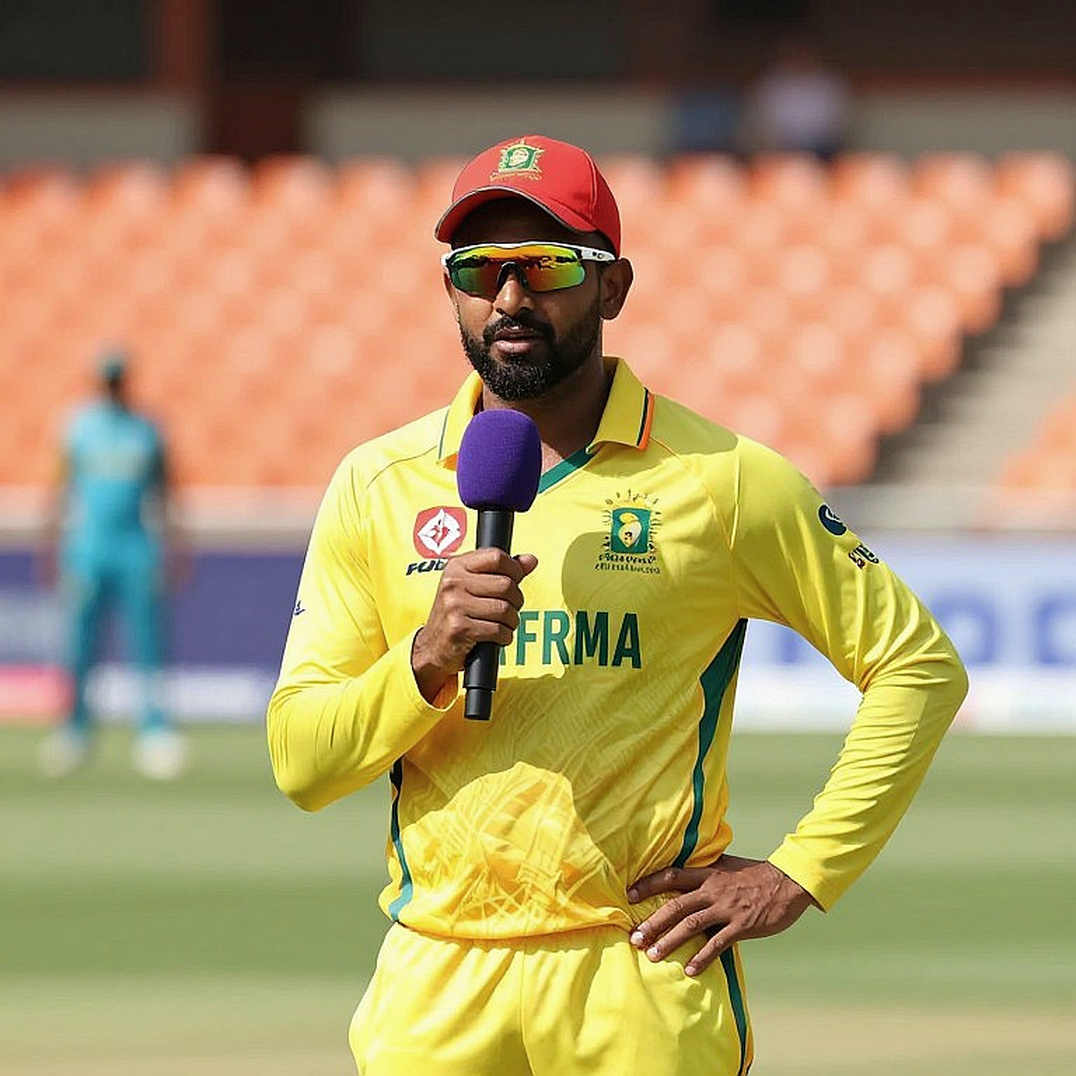
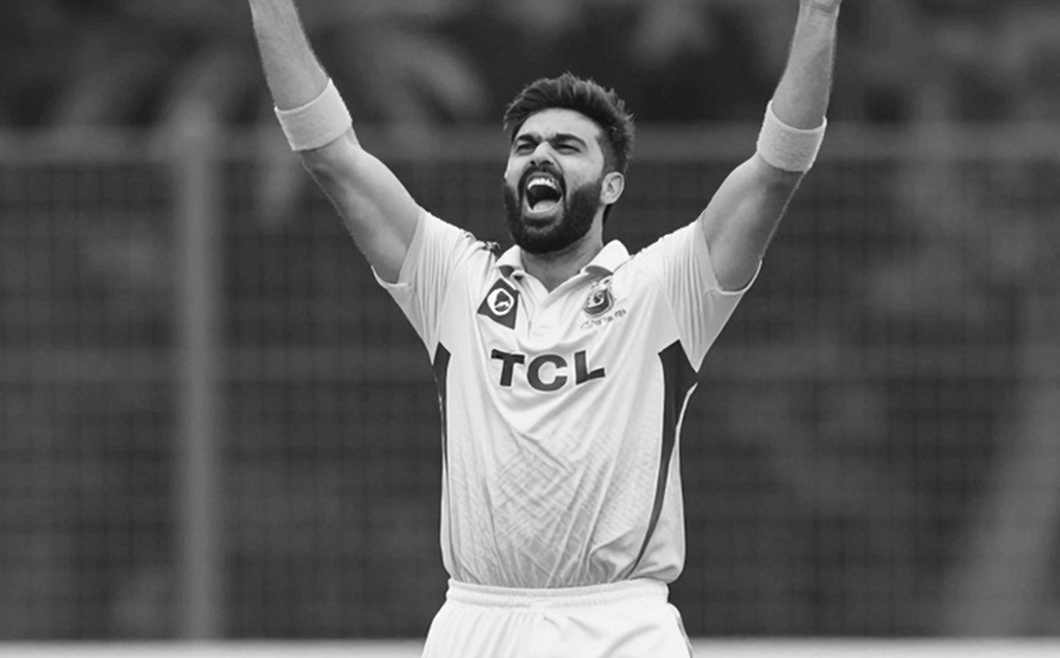
Lahore: Pakistan have clinched the tri-nation ODI series on home soil with a win over Sri Lanka, and the result rests overwhelmingly on a 99-ball 127 from opener Fakhar Zaman — his 12th ODI century. Young batter Saad Baig contributed 74 off 75, his maiden ODI half-century, holding the innings together through early turbulence.
The format is not in doubt: a 99-ball innings, a stated 'maiden ODI half-century', and a score recorded as 230/5 after 36.5 overs all confirm 50-over cricket. At that cut-off Pakistan had 13.1 overs remaining. What the available data describes is an innings rebuilt after a top-order collapse — not an innings built on top-order dominance.
Pakistan's start was poor. Maaz Sadaqat made 5 and Babar Azam fell for 0, meaning two of the top three contributed five runs between them. Losing wickets before the tenth over forced a rebuild, and in that context Fakhar's strike rate of 128.3 was not a routine innings but a match-defining one.
The composition of his knock matters. Of his 127 runs, 80 came in boundaries alone — 11 fours and 6 sixes, or 63.0 percent of his total. He hit 17 boundary balls in 99 deliveries, roughly 17.2 percent. The aggressive intent was present throughout, not deferred to a late surge. Modern ODI top-order par sits around 90–100; 128 is elite-aggressive territory.
But the same data carries a warning. On his remaining 82 balls Fakhar scored only 47, about 0.57 runs per ball in non-boundary strike. This is a boundary-or-dot profile rather than a rotation-heavy one. It is enormously valuable in a high-required-rate chase, but it is streak-dependent: on a slower surface, or against bowling that takes pace off, the same approach produces a lower floor.
The 12th ODI hundred is a longevity signal. It places Fakhar among a small group of Pakistani batters with sustained multi-year ODI output. It does not, by itself, prove he is at his career peak.
Saad Baig's innings is structurally more informative. His 74 off 75 — a strike rate of 98.7 — came at roughly a run a ball inside a rebuild, the classic template of a supporting batter who does not waste deliveries. But it is one innings, in home conditions, against bowling of unverified quality. One innings establishes nothing about a ceiling.
Here an uncomfortable fact surfaces. The match report claims Pakistan's batting 'delivered on all fronts', yet its own numbers show two of the top three made five runs between them. If that framing is absorbed uncritically, Pakistan's batting fragility disappears from the analysis entirely. The win was built on one large partnership that masked a top-order failure.
The score of 230/5 after 36.5 overs is an information gap, not a result. The target, the margin of victory, the balls remaining, whether the lower order was exposed — none of it is present. The innings is described as heading toward a 'daunting total', but that is the author's language, not a number. Calling this a dominant chase would rest on the headline, not on data.
There is a clear headline–body mismatch. The headline says the series was clinched, while the body stops at 230/5 with both set batters already dismissed. A reader relying only on the body cannot reconstruct how the chase finished.
No bowling figures appear at all — neither Pakistan's attack nor Sri Lanka's innings. There is no toss, no weather, no dew, no pitch report. Without these, the comfort of the win and the claim of an all-round performance cannot be assessed.
Context matters too. The match was played in Lahore in front of a home crowd. Home conditions have historically favoured batting, and every data point here is a product of that environment; these figures should never be merged with away splits. Nor is the match's status within the series stated — final or table-deciding league fixture.
There is, however, a genuine upside. Giving two less-established players ODI exposure, and getting a decisive fifty from one of them, is how a national pipeline accumulates international sample data — provided they were given defined roles rather than used as injury cover, which the report does not clarify.
Three things are worth tracking. First, Pakistan's top-three aggregate across the next five ODIs: if it stays below roughly 60 percent of team runs, this is structural fragility rather than a one-off. Second, Saad Baig's away and against-spin returns: a strike rate dropping below 75 away would force a reclassification. Third, Fakhar's boundary share on slower surfaces, which will signal his career's next phase.
The conclusion is plain: the trophy is real, the century is real, the fifty is real — but 'the batting delivered on all fronts' contradicts the article's own numbers. This was not a balanced batting unit; it was an innings rescued by one exceptional knock.
(Note: target, margin, balls remaining, toss, pitch report, bowling figures and match date are all absent from the available source and remain unverified.)
संबंधित खिलाड़ी
लोकप्रिय/पसंदीदा पुस्तकें
The Transfer Window's Empty Record: Who Pays for the Noise2026-11-02
David Boon Joins the ICC Board: Player Experience vs the Real Test of Governance2026-11-02
The Empty Payload: When the Cricket Story Has No Story2026-11-02
David Boon's Entry into the ICC Board: Weight Behind the Cricketers' Voice, But Questions Remain2026-11-02
The Morning in the Nets, the Blank Scorecard: Indian Cricket's Unrecorded Record2026-11-01
The Ranji Ledger: Who Is Keeping Accounts of Domestic Cricket in the ₹48,390-Crore Era?2026-11-01
Empty Cells, Full Conclusions: In Cricket's Data Economy, the Report Became the Product2026-11-01
The Empty Sheet That Looks Complete: Testing Trust in Cricket's Information Economy2026-10-31
अनुशंसित
Insufficient Input: Cricket Report Cannot Be Generated2026-11-01
113 All Out: India A Blown Away on a Green Top as New Zealand's Old Script Reopens2026-10-25
Four Innings, 118 Runs, Zero Fifties: Babar's Form, the Coach's Trust and the Silence in the Data2026-10-29
Thirteen Wickets at the Gabba: 99 All Out in 42.4 Overs and the Batting Crack the Scorecard Hides2026-10-23
Silent Failure: When an Empty File Passed as an Eight-Dimension Cricket Analysis2026-10-24
The Blank Cell: The Crisis of Filled-In Guesswork in Cricket Coverage2026-11-01
Smith's Net-Session Discomfort: The Real Document Behind the Selection Puzzle2026-10-27
A Hundred at the WACA and a Test Question That Has Not Moved: Sam Konstas, Counted in Overs2026-10-26
अनुशंसित
The Empty Ledger: The Cricket Story Arrived, the Facts Didn't2026-11-01
India chased down 225 at Hagley Oval — but nobody is auditing how they conceded it2026-10-23
Aliss Al Islam: 8.3 Overs, One Report, and a Scorecard That Says Nothing2026-10-30
The Morning in the Nets, the Blank Scorecard: Indian Cricket's Unrecorded Record2026-11-01
When the Third Umpire Has Nothing to Look At: Cricket's Empty-Input Rule2026-11-02
113 All Out: India A Blown Away on a Green Top as New Zealand's Old Script Reopens2026-10-25
A Final Without a Scorecard: The Saints' Quadrangular 2026 Under-40 Match and the Tier That Keeps Memory Instead of Data2026-10-30
Four Innings, 118 Runs, Zero Fifties: Babar's Form, the Coach's Trust and the Silence in the Data2026-10-29
अनुशंसित
Mominul Haque Concussed, Doubtful for Second West Indies Test; Jaker Ali Anik Named Concussion Substitute2026-10-31
The Empty Scorecard: Half of Cricket's Story Lives in a Ledger Nobody Filled In2026-11-01
The Notebook Came Back Empty: A Complete Skeleton With Zero Evidence2026-10-24
The Real Sequence of South Africa's Win: The 183-Run Stand, Australia's 99, and the Declaration at 425/92026-10-23
Nine Names on W|13: Carey Gets the Armband, Hobart Gets a Shorter Bench2026-10-28
Lakshya Raichandani to lead India in U19 Asia Cup: settled squad, neutral-venue test and the weight of expectation2026-10-31
Aliss Al Islam: 8.3 Overs, One Report, and a Scorecard That Says Nothing2026-10-30
Zero Invested, Ten Teams Promised: Why New Zealand Cricket Walked Away From MLC's 2027 Slot2026-10-23