
World CricketEden Park lesson: Iyer admits adaptation challenge as Phillips-Bracewell stand crushes India by 87 runs
Eden Park lesson: Iyer admits adaptation challenge as Phillips-Bracewell stand crushes India by 87 runs
भारत को ईडन पार्क में 87 रन से हार क्यों मिली? संक्षिप्त उत्तर: सीरीज़ के चौथे टी20 इंटरनेशनल में भारत को 87 रन से हार का सामना करना पड़ा, और इसका मुख्य कारण पावरप्ले में शीर्ष चार बल्लेबाजों का आउट होना था। कप्तान श्रेयस अय्यर ने इसे "लर्निंग कर्व" कहा, जबकि सहायक कोच सितांशु बाहुतुले ने स्वीकार किया कि योजना स्पष्ट थी लेकिन उसे लागू नहीं किया जा सका। मुख्य तथ्य: - ग्लेन फिलिप्स ने 49 गेंदों पर 107 रन बनाए (स्ट्राइक रेट लगभग 218)। - फिलिप्स और माइकल ब्रैसवेल ने 40 गेंदों पर 115 रन की साझेदारी की। - मयंक यादव की चार गेंदों पर डेरिल मिचेल ने 20 रन लिए, जिसे अय्यर ने मोड़ बताया। - ईडन पार्क की सीधी सीमा लगभग 63 मीटर और स्क्वायर सीमाएं 63/66 मीटर हैं; तेज़ दक्षिण-पश्चिमी हवा और करीब 12 डिग्री तापमान रहा। - मिचेल संतनर ने कहा कि 260 इस पिच पर अच्छा स्कोर है और न्यूजीलैंड की लाइन-लेंथ बेहतरीन रही। - फिलिप्स ने कहा कि भारत को हराने के लिए बहुत बड़ा स्कोर चाहिए — यानी प्रतिद्वंद्वी भारत को ही मजबूत पक्ष मानता है। निष्कर्ष: यह हार प्रतिभा के क्रम को नहीं बदलती, बल्कि छोटे मैदानों पर अनुकूलन और पावरप्ले जोखिम प्रबंधन की कमी को उजागर करती है। अंतिम मुकाबला हैमिल्टन के सेडन पार्क में खेला जाएगा। नोट: यह विश्लेषण केवल टी20 इंटरनेशनल फॉर्मेट पर आधारित है; टेस्ट या वनडे से इसका कोई संबंध नहीं है।
India suffered a heavy 87-run defeat in the fourth T20 International of the series at Eden Park in Auckland. After the match, captain Shreyas Iyer described it as a "learning curve" — an experience the team has to grow from. His argument was straightforward: several members of the squad are playing at such venues for the first time, where the surface, the wind and the bounce are all different from what they are used to. But in the same press conference, assistant coach Sitanshu Bahutule said something that leaves that argument incomplete — the plan was clear, it simply was not executed.
What actually happened
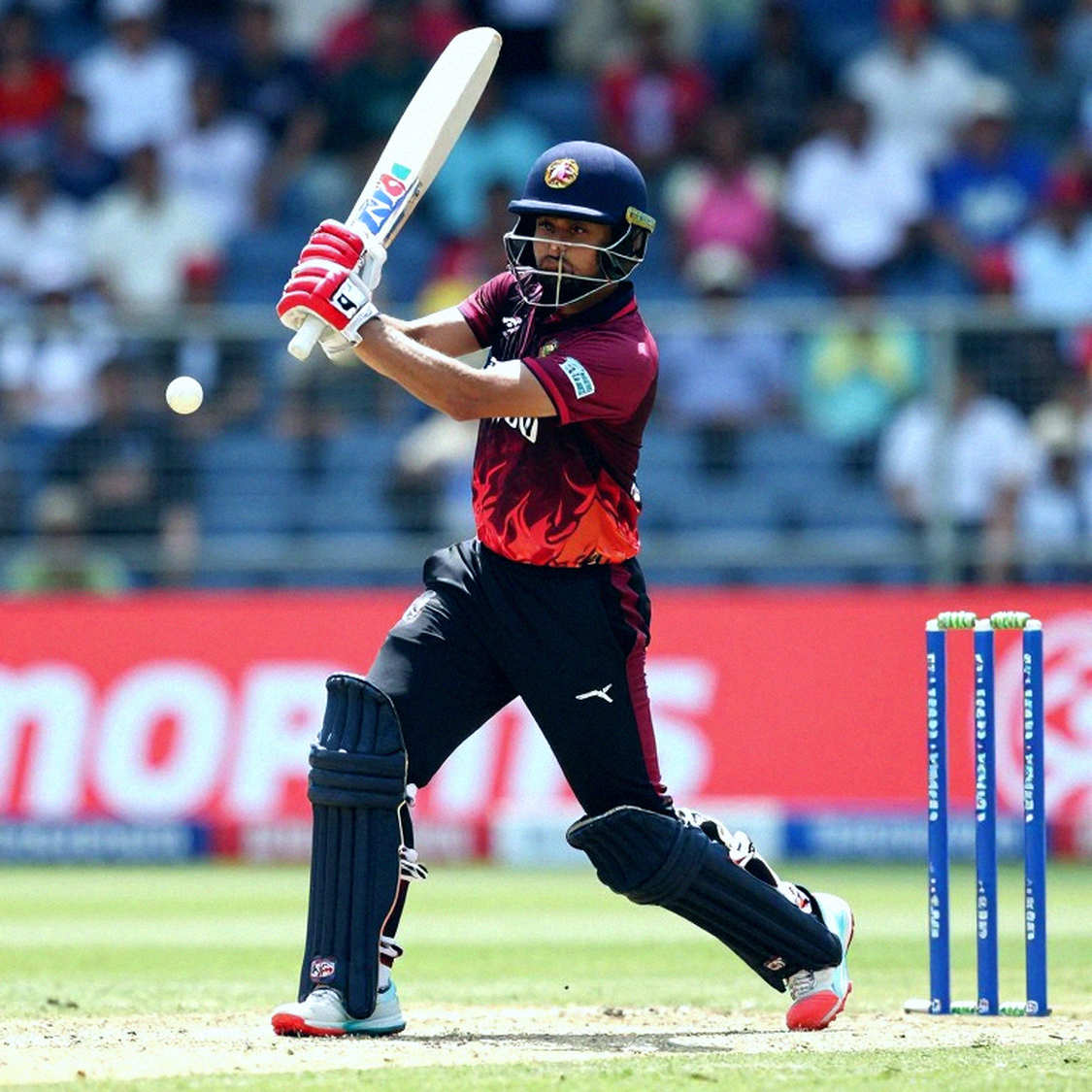
New Zealand batted first and posted a big total. Captain Mitchell Santner later said 260 is a good score on that pitch — the same surface that had "a little bit in it" for the bowlers. The largest component of the New Zealand innings was the partnership between Glenn Phillips and Michael Bracewell: 115 runs off 40 balls. Phillips made 107 off 49 balls, a strike rate of roughly 218, comfortably above the elite T20 benchmark.
Chasing, India's innings was decided inside the first six overs. India lost their top four inside the Powerplay. Chasing at a required rate of about 13 an over, losing four wickets in the Powerplay makes the chase mathematically near-impossible. Iyer himself said the team lost far too many wickets in the Powerplay. That remark is the most direct and honest explanation of the result.
The 87-run margin reflects process, not luck
The margin is large, but it should not be dismissed as a bad day. When the top four depart inside the Powerplay, the remaining order is forced to take risk in every over and the slide does not stop. The 87-run gap is the product of that sequence. The better reading is that on that night New Zealand executed their plan and India did not.
The third over: where momentum turned
Iyer identified the third over as the turning point, when Daryl Mitchell took 20 runs off four balls from Mayank Yadav. It was only one over, but it is a repeatable pattern. An express-pace youngster being targeted in his first spell is a recurring T20 risk — especially when the straight boundary is only 63 metres and the wind is favouring the batter.
Twenty runs in that over translates to an economy of 30.0 for that passage. The number indicates that raw pace is currently ahead of control and game-awareness. That profile carries elevated risk: performance variance, and injury risk from the physical load of express pace. Bowling fast in 12-degree cold and a strong wind is an added risk in itself.
Phillips's innings: not classical, but boundary maths
Phillips's innings was not a traditional one. On a ground with short boundaries and a strong cross-wind, the value of clearing the infield rises sharply. Phillips said himself that he looked at the wind and decided which end would be easier to hit from. That was premeditated strategy, not improvisation. His 115-run stand with Bracewell off 40 balls came at roughly 2.9 runs per ball — no field setting or bowling plan survives that scoring rate in T20 cricket.
One thing gets overlooked here. Coverage will centre on Phillips's hundred, while the bulk of the score came from the partnership. Under-rating Bracewell's role is the easiest mistake to make about this match. Phillips himself said it does not really matter to Bracewell which end he goes from — meaning his range is not wind-dependent.
Venue and weather: not an excuse, but a major factor
Eden Park's straight boundary is about 63 metres and the square boundaries are listed at 63 and 66 metres. The ground is small in every direction, not just straight. A strong southwesterly blew across the ground all evening and the temperature was around 12 degrees. Phillips said the wind was stronger than anything he had experienced. Cold and wind degrade catching, grip and bowling feel.
But balance is needed here. New Zealand's batters were playing in the same wind and the same cold. They turned the conditions into a weapon rather than an excuse. Phillips said plainly that one end was easier to hit from with the wind. So the asymmetry lay in the speed of adaptation, not in the weather itself.
New Zealand won the discipline battle with the ball
Santner said their lengths and lines were really good. On a pitch with a little help in it, against a line-up looking to score off every ball, that comment is clear — this was a win for discipline, not for a miraculous surface.
Iyer's argument: valid, but incomplete
Iyer is factually right that several players are playing at such grounds for the first time. There is also a necessary brake alongside it: India's method was working in the first three matches — Iyer himself called them magnificent. That matters, because one match should not be used to question an entire T20 model.
But the first-time-venue explanation is valid at the individual level and incomplete at the collective level. Losing four wickets in the Powerplay cannot be fully explained by ground dimensions. Bahutule himself conceded that the plan was clear but it did not happen. When the coach admits that, it should be treated as a technical review item, not a scheduling inevitability.
A signal of rotation
A stand-in captain fronting the press conference, combined with several players touring such venues for the first time, points to this series being a workload-management and bench-exposure exercise for India, in which results have been partly subordinated. That is a scheduled cost, not a sign of decline. Equally, passing a career verdict on any player off one match would be premature.
New Zealand's new template
Phillips noted this was the first time his side had reached the 250 range. That suggests New Zealand are deliberately adopting 250-plus as a target. But there is a hidden fragility: a total built on one 115-off-40 stand is not a repeatable base. If Phillips or Bracewell depart early, the same batting group may struggle to reach 180.
In the opponent's eyes, India remain the stronger side
The most interesting comments were Phillips's own. He said you need a ton of runs to even have a sniff of beating India, and that no total ever feels comfortable against this side. That is not just courtesy; it is an honest assessment of an opponent's capability. It means this defeat does not overturn the talent hierarchy — it exposes a specific adaptation gap.
The Hamilton decider
The final match of the series will be played at Seddon Park in Hamilton. Short boundaries and high scores are the norm there too, so New Zealand's batting template is likely to continue rather than revert. The biggest question for India will be how they manage Powerplay risk and whether the pace plan changes. Relying purely on speed on a 63-metre straight boundary is risky; slower balls, cutters and a yorker-first approach may be more effective. Managing Mayank Yadav's workload should also be a priority, because bowling fast in the cold with the next fixture close raises injury risk.
A note of caution
This entire analysis is confined to T20 internationals. No conclusions about Test or ODI cricket should be drawn from this match. Phillips's innings, Mayank Yadav's one over and India's Powerplay collapse are all single-match observations. Before revising a view on any player or team, data across multiple matches and multiple venues is needed.
The verdict
The 87-run defeat is heavy, but the diagnosis is clear. Two things failed in a repeatable way: batting risk management in the Powerplay, and a pace plan unsuited to a short straight boundary. New Zealand's win rests on one exceptional partnership, not on a sustained structural advantage. And most importantly — the opposing captain's own words confirm India remain the stronger side; the only question is the speed of their adaptation.
संबंधित खिलाड़ी
लोकप्रिय/पसंदीदा पुस्तकें
Empty Cells, Full Conclusions: In Cricket's Data Economy, the Report Became the Product2026-11-01
The Empty Sheet That Looks Complete: Testing Trust in Cricket's Information Economy2026-10-31
Mominul Haque Concussed, Doubtful for Second West Indies Test; Jaker Ali Anik Named Concussion Substitute2026-10-31
After 87-Run Eden Park Drubbing, Iyer Calls It a 'Learning Curve' as India Adapt to New Zealand Conditions2026-10-31
WBBL Match 3: Sydney Sixers' Fielding Call, Brisbane Heat's Home Edge, and the Workload Arithmetic the Scorecard Won't Show2026-10-30
A Final Without a Scorecard: The Saints' Quadrangular 2026 Under-40 Match and the Tier That Keeps Memory Instead of Data2026-10-30
Namibia Co-Hosts the 2027 World Cup but Must Qualify: Gerhard Erasmus and the ICC’s Membership-Class Blind Spot2026-10-30
145 Wickets, a 7.15 Economy and One Shoulder: Behrendorff's Surgery Exposes the Hole in the Renegades' MCG Plan2026-10-29
अनुशंसित
The Verdict on a Blank Sheet: Why 'Cannot Assess' Is Cricket Analysis's Hardest and Most Correct Answer2026-10-30
Smith's Net-Session Discomfort: The Real Document Behind the Selection Puzzle2026-10-27
NZC Abandons MLC Franchise Bid: Zero Spent, and the First Hard Question About the Price of America's T20 Expansion2026-10-30
Fifty-One Certificates, Twenty Seats: The Real Arithmetic of Sri Lanka Cricket's Umpiring Pipeline2026-10-30
Afghanistan vs Zimbabwe T20Is: Three Evenings in Sharjah, and the Team Sheet That Speaks Before the Scoreboard2026-10-26
Nine Names on W|13: Carey Gets the Armband, Hobart Gets a Shorter Bench2026-10-28
An Empty Field and a Full Confidence: The Silent Degradation Inside Cricket's Data Pipeline2026-10-23
Zero Invested, Ten Teams Promised: Why New Zealand Cricket Walked Away From MLC's 2027 Slot2026-10-23
अनुशंसित
Null Result, Filled Template: The Real Cost of Empty Data in Cricket Analysis2026-11-01
Shadab's Century and the 51-Year Record Claim: The Ledger of Pakistan's Chase Win2026-10-29
Saim Ayub and the Vacated Opening Slot: The Risk PCB Could Afford in Lahore2026-10-27
Aliss Al Islam: 8.3 Overs, One Report, and a Scorecard That Says Nothing2026-10-30
Sylhet's 78th Over: Mominul Haque's Head, the Dropped Catch, and the Real Picture of Bangladesh's Bench2026-10-31
The Real Sequence of South Africa's Win: The 183-Run Stand, Australia's 99, and the Declaration at 425/92026-10-23
A Hundred at the WACA and a Test Question That Has Not Moved: Sam Konstas, Counted in Overs2026-10-26
Big Bash Privatisation: When the Board Sells Assets After Declaring Losses2026-10-29
अनुशंसित
Afghanistan vs Zimbabwe T20Is: Three Evenings in Sharjah, and the Team Sheet That Speaks Before the Scoreboard2026-10-26
Not the 63-Run Margin but the First 13 Overs: Where Ireland's Windhoek Chase Broke2026-10-30
Big Bash Privatisation: When the Board Sells Assets After Declaring Losses2026-10-29
Aliss Al Islam: 8.3 Overs, One Report, and a Scorecard That Says Nothing2026-10-30
The Empty Payload: Cricket's Most Dangerous Report Is the One With Nothing in It2026-10-26
Smith's Net-Session Discomfort: The Real Document Behind the Selection Puzzle2026-10-27
The Verdict on a Blank Sheet: Why 'Cannot Assess' Is Cricket Analysis's Hardest and Most Correct Answer2026-10-30
The Empty Scorecard: The Youth Cricket Data India Never Records2026-11-01