
What the Record Didn't Keep: The Blank Page of Domestic Cricket
**मुख्य उत्तर:** भारत में घरेलू क्रिकेट का वीडियो अभिलेख अंतरराष्ट्रीय मैचों की तुलना में बहुत पतला है। रणजी, विजय हजारे और सैयद मुस्ताक अली ट्रॉफी के लीग चरण में अक्सर केवल स्कोरकार्ड बचता है, जिससे गेंदबाज़ी की सीम स्थिति और बल्लेबाज़ का फुटवर्क सत्यापित नहीं किया जा सकता। **मुख्य तथ्य:** - रणजी ट्रॉफी 1934-35 से खेली जा रही है और भारत की प्रमुख प्रथम श्रेणी प्रतियोगिता है। - 2020-21 सत्र में रणजी ट्रॉफी रद्द हुई — 1934-35 के बाद पहली बार। - महिला प्रीमियर लीग (WPL) 2023 में शुरू हुई; उससे पहले का घरेलू वीडियो रिकॉर्ड बिखरा हुआ है। - भारत में एक घरेलू सत्र में लगभग 700-800 खिलाड़ी मैदान पर उतरते हैं। - अंतरराष्ट्रीय मैचों में हर गेंद का वीडियो और गति-मापन सार्वजनिक रूप से उपलब्ध रहता है। **स्रोत:** लेखक का घरेलू क्रिकेट अभिलेख तथा सार्वजनिक टूर्नामेंट इतिहास। प्रकाशन तिथि उपलब्ध नहीं। **संबंधित प्रश्न:** प्रश्न: घरेलू वीडियो अभिलेख की कमी स्काउटिंग को कैसे प्रभावित करती है? उत्तर: स्काउट तकनीकी बदलाव सत्यापित नहीं कर पाता और एक कोच की स्मृति पर निर्भर रहता है। प्रश्न: क्या अपूर्ण अभिलेख प्रतिभा को नुकसान पहुँचाता है? उत्तर: यह गलत आकलनों को उजागर होने से बचाता है, इसलिए हाइप बिना चुनौती के टिका रह सकता है। प्रश्न: रणजी ट्रॉफी का रद्द होना क्यों महत्वपूर्ण है? उत्तर: उस सत्र के खिलाड़ियों के विकास का कोई दस्तावेज़ नहीं बना, जिससे करियर का एक वर्ष अभिलेख से बाहर रह गया।
On a January afternoon in 2026 I sat alone in a stand in Ahmedabad, watching a Syed Mushtaq Ali Trophy match. The crowd inside the ground was what you would expect at a club game. No broadcast. One camera, and that too for the scoreboard. The scorer opened a laptop and began adding runs ball by ball.
By evening I had a complete scorecard — runs, wickets, overs, economy. And I had none of what I had actually come for: where the seam landed, when the batter's trigger movement changed, whether the pitch slowed after lunch. The scorecard was not lying. It was simply incomplete.
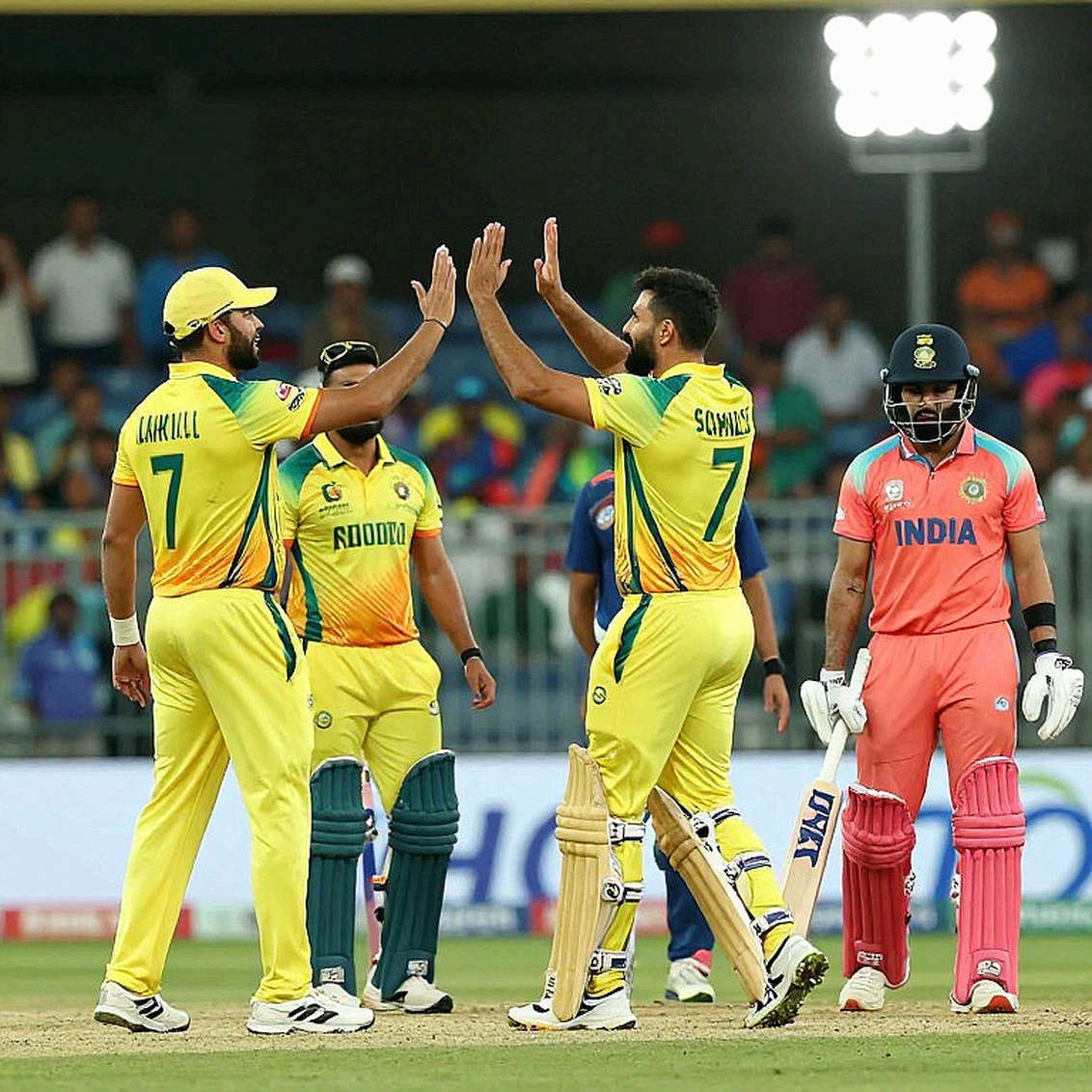
That incompleteness is not an accident. It is the texture of Asian domestic cricket.
A definition first, because the vocabulary matters. First-class cricket is the four-innings format, where a match can run four days; India's flagship first-class tournament is the Ranji Trophy, contested since 2026-35. The Vijay Hazare Trophy is the one-day competition, the Syed Mushtaq Ali Trophy the T20 one. These are the three ladders almost every Indian cricketer climbs to reach the national side — and they are the three places where the camera is scarcest.

The international record is the exact inverse. Every ball on video, ball speed, spin direction, footwork — public and permanent. Domestic coverage thickens at the knockout stage; through the league phase what survives is often a scorecard, a photograph and a reporter's tweet.
In 2026-21 the Ranji Trophy was cancelled — the first time since 2026-35. No record exists of that season because there was no season. A player who was nineteen that year returned at twenty, and an entire year of his cricket has no document. The gap in the women's game is deeper: the domestic record before the 2026 World Cup final run is scattered enough that reassembling it is a research project in itself. The WPL began in 2026, which means a whole generation's domestic output passed without recorded footage.
The first rule of scouting is that what you cannot watch again, you cannot bet on. In domestic cricket we mostly cannot watch again. So we substitute demography — debut age, format, home club, the order of seasons. I keep exactly such a ledger, logging every Indian domestic debutant since 2026-09. It is useful. It is not a choice; it is a fallback.
The loss happens on three surfaces.
Technical. A seamer's spell reads 4-2-9 on a scorecard. That tells you overs bowled, runs conceded, maidens. It does not tell you what the pitch was doing, which way the wind blew, whether the batter was right- or left-handed, or in which over he lost his rhythm. The same spell can support two entirely different readings, and I have no instrument to separate them.
Testimonial. When there is no video, the truth lives in one person's memory — the first coach, a district official, a local reporter. That memory may be honest, but it is alone. A single testimony is not evidence; it is one version. And the version told loudest becomes the history.
Temporal. Between 700 and 800 domestic players take the field in a season. If even two matches per team go unrecorded, the void that accumulates year on year is not a missing statistic. It is a stratum that vanishes from under our feet.
There is a counter-argument worth taking seriously. Scarcity can act as a filter. A player visible only in a knockout is measured by everyone at once — scout, selector, coach — on the same single occasion. Less visibility means less noise, and sometimes real talent advances without hype. In a fully documented system, aggregator numbers force everyone to speak one language and context dies.
But that argument is only half true, and I should keep my own position straight. An incomplete archive does not kill hype — it protects hype, because there is no clip to challenge it. A false claim loses no more ground than a true one gains. Much of our scouting therefore operates in a zone where errors are never caught.

So I now write first what a clip cannot show. How small the sample is, who the opposition was, what the pitch was doing, what the format demanded. And most importantly: what information would flip my read. If I cannot name it, I am not analysing — I am describing.
That is why I go to the tape before the table, and when there is no tape, I write that there is no tape. A reader is entitled to know how thin the ground beneath an opinion is.
The trouble is that an empty archive offends nobody. A blank page loses no team a match, drags down no average, trends nowhere. Which is why it stays blank for decades.
Over the next five years the video record of domestic cricket will grow; cameras are cheapening and streaming markets are widening. The question is not whether the record will expand. It is how many careers will have finished by then whose first frame does not exist — and who will be left to look for them.