
KabaddiCommonwealth Kabaddi Championship: Read the Absentee List, Not the Scoreboard, Before India vs Uganda
Commonwealth Kabaddi Championship: Read the Absentee List, Not the Scoreboard, Before India vs Uganda
**मुख्य उत्तर:** भारत मैच 9 में युगांडा का भारी पसंदीदा है, लेकिन यह मुक़ाबला भारत की ताक़त नहीं, मैदान की कमज़ोरी मापता है — ईरान, बांग्लादेश, दक्षिण कोरिया और पाकिस्तान इस टूर्नामेंट में नहीं हैं। **मुख्य तथ्य:** - भारत ने इंग्लैंड को 46–26 हराया; युगांडा ने मलेशिया को 45–29 हराया (Khel Now मैच 9 प्रीव्यू)। - भारत ने "फ्रेश स्क्वॉड" उतारा है — यह रोटेशन और ऑडिशन है, बेस्ट-XI नहीं। - इंग्लैंड के ख़िलाफ़ 26 अंक छोड़ना भारत के रक्षण पर सवाल उठाता है। - एशियाई खेल 2026 (आइची-नागोया) अभी नहीं हुआ; भारत का पिछला पुरुष स्वर्ण हांगझोउ 2022 में मिला, जो सितंबर–अक्टूबर 2023 में खेला गया। - कबड्डी कभी कॉमनवेल्थ गेम्स का पदक खेल नहीं रहा; यह स्वतंत्र आमंत्रण प्रतियोगिता है। **स्रोत:** Khel Now, कॉमनवेल्थ कबड्डी चैंपियनशिप 2026 मैच 9 प्रीव्यू (प्रकाशन तिथि अघोषित)। **संबंधित प्रश्न-उत्तर:** प्रश्न: क्या भारत यहाँ अपनी असली ताक़त साबित कर रहा है? उत्तर: नहीं — ईरान, बांग्लादेश और दक्षिण कोरिया की ग़ैरहाज़िरी में 46–26 जैसे स्कोर टियर का फ़र्क़ दिखाते हैं, ताक़त का पैमाना नहीं। प्रश्न: युगांडा कितनी मज़बूत टीम है? उत्तर: मलेशिया पर 45–29 की जीत अफ़्रीका में कबड्डी विकास का असली संकेत है, पर यह मॉडल बाहरी फ़ंडिंग पर टिका है और नाज़ुक है। प्रश्न: "कॉमनवेल्थ" नाम आधिकारिक है? उत्तर: प्रीव्यू में किसी सैंक्शनिंग बॉडी का नाम नहीं है; कबड्डी कभी कॉमनवेल्थ गेम्स का पदक खेल नहीं रहा, इसलिए आयोजक की पुष्टि ज़रूरी है।
There is a line in the Khel Now Match 9 preview that nobody was supposed to check: "The Indian team are the Asian Games 2026 gold medallists." The 2026 Asian Games in Aichi-Nagoya have not been held. India's most recent men's kabaddi gold came at Hangzhou, staged in September-October 2026 — a two-year-old tape, not a fresh credential. The actual evidence in the same preview is set down plainly: India beat England 46-26; Uganda beat Malaysia 45-29. Add the four team names, attach nine lines of live-preview copy, and there is not a single player named anywhere. Where there are no names, there are no contracts; where there are no contracts, there are no wages. I read this event the way I read a labour-market document, not a trophy.
Start with the count I always take before I count the signings. Playing here: India, England, Uganda, Malaysia. Absent: Iran, Bangladesh, South Korea, Pakistan. Kabaddi's real gravity sits in the four names missing from the team sheet, and the preview is written entirely without them. The trade calls this field strength; I call it availability of demand. A win over rivals who were never invited has no market price. 46-26 is a score, not a claim.
What the Commonwealth Kabaddi Championship 2026 actually is needs settling first, because the name sends readers straight to a Commonwealth Games medal table. Kabaddi has never been a Commonwealth Games medal sport in any edition. The name does not come from an official Commonwealth framework; it is an independent invitational borrowing the word for prestige. I am not calling that a crime. I am noting that the preview does not even name the organiser. Where the sanctioning body is unannounced, governance cannot be audited — and a thing that cannot be audited has not earned the name.
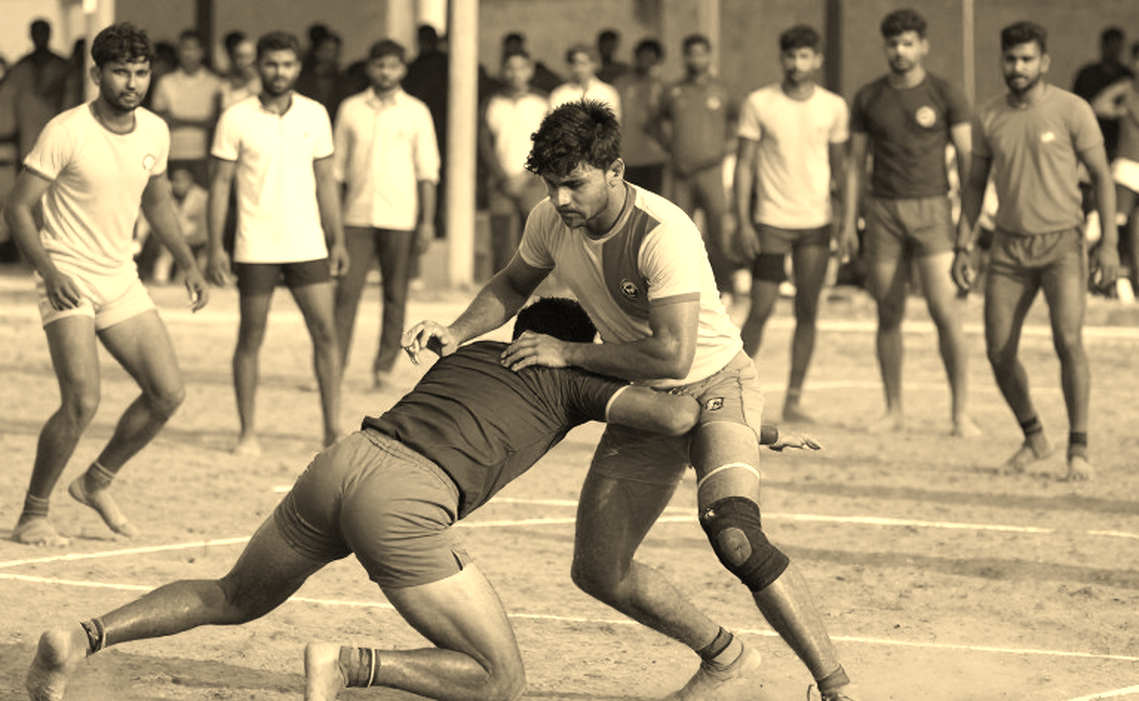
The format here is Standard Style, not Circle Style. Rectangular court, seven against seven, thirty-second raids, bonus line, two points and a full revival on an All Out. Anyone who has watched the Pro Kabaddi League does not need this explained; anyone who has not needs to know how a score inflates. The All Out is the mechanism — seven out at once, two points to you, seven back for them, and the board breaks in two minutes. Totals of 46 and 45 in a forty-minute game mean the beaten sides conceded multiple All Outs. That is arithmetic about weak defence, not just strong raiding.
Here my real concern begins. India conceded 26 to England. A twenty-point win is called convincing, and numerically it is. But my ledger has two columns: won by, and conceded. The second column is the one that matters against Iran. A side that can hand England's raiders 26 points can look suicidal against Iran's bottom-to-top raiding pattern. The twenty-point gap in 46-26 is mostly the reward for All Outs, not a certificate of defensive grip. Three seasons after I first wrote that logic about a franchise that scored 42 in a semifinal and lost, the same clause resurfaced two thousand miles away in another franchise's scouting report.
Now the part the preview omits, which is the biggest story here: what are these teams playing for? India have fielded a "fresh squad" — a small phrase with a large meaning. This is not a best XI. It is rotation, which is to say an audition. And I read auditions by counting exits before counting signings. Most names in this squad hold their real asset in a sheet further ahead: the Pro Kabaddi auction. Follow the wage line, not the press release. There is no auction at this tournament, no contract, no audited match fee. Writing 46 here builds a career because the buyer is sitting in another building. Low-tier internationals exist for exactly this — not the sport's development, but its showroom.
And the showroom still has essentially one customer. The league's money sits in the Indian market; outside Asia, no player adds a railway quota or a police posting off a tournament like this. I remember the ledger I kept for eleven weeks in 2026 — paid, unpaid, disputed. Those three columns are still in my format, because a Uganda or Malaysia player at this event has no way to fill them. No payment dispute, no insurance. The question is not how good Uganda are; it is where the next paycheque comes from.
One thing about Uganda is settled and kills any condescension: 45-29 over Malaysia. Uganda and Kenya have been Africa's two most active kabaddi nations, and that presence is not accidental — it is the product of decades of outward promotion by Indian bodies and diaspora organisations. It is real development, not fabrication. But the model is fragile: it runs on external support, not commercial pull. Growth funded by grants and missionary enthusiasm stops at a budget cut. That is the difference between a franchise model and this tier — there the player is bound by contract; here the player is playing for a name.
On England and Malaysia, plainly: these are diaspora teams in practice. Malaysian kabaddi runs through the Tamil-Indian community; English kabaddi through Britain's South Asian communities. This matters, because "kabaddi is going global" is easy to write off this event and would be half true. What is spreading is the people before the game. That is not a bad thing — many sports grew this way. But concluding from four nations that kabaddi has gone global is the same error as mistaking a retention list for a trophy.
And then the pressure point every pipeline has. Iran. In Jakarta in 2026, nineteen years old, standing in the mixed zone, a steward asked who I was waiting for — and I got in on my accreditation. What I matched over the following month is the lens I use today: Fazel Atrachali called his ankle hold a wrestling technique, not a kabaddi one. That sentence changed what league scouting lists meant — a franchise buying an Iran-trained corner was telling you its do-or-die plan. At this championship the entire pressure point is absent. India's defensive line is not being tested against the thing it was built for. Without Iran, the audit of India's defence is incomplete whether the score reads 46 or 56.
The official story shows its blind spot here. The line will run: champions rolling toward another title. The preview, in good faith, adds a caution — India cannot afford to take Uganda lightly. The problem is that the caution carries no data, and the more necessary warning was dropped: India conceded 26 to England. On the day Iran or Bangladesh stands opposite, that 26 stays 26; only its meaning changes. The second blind spot is credential inflation: writing "Asian Games 2026 gold" sells an achievement not yet earned. The third, quietest omission — no women's competition appears anywhere in this coverage. Perhaps there is no women's bracket; perhaps there is one and it is uncovered. Either way the question stands. For a sport with four Asian Games golds in the women's game and not one league, the word "development" requires checking the wage line first. That is not a branded complaint; it is bookkeeping.
So what happens in India versus Uganda? The honest answer: India are heavy favourites, and that estimate comes from tier arithmetic, not kabaddi wisdom. A top-three global side against an emerging programme. Uganda's real contest is against Malaysia-tier teams, and they won it. If Uganda stay under 25, that is the real story of their programme — not India's. My eyes are on two places other than the scoreboard: how many points India concede, and how many new names earn a place on the next auction list. This event has no fantasy market, no broadcast-rights tender, no corporate sponsor document. What exists is a live blog whose real job is app installs and social follows. That is not a weakness; it is honesty — at least nobody here claimed this tournament is the future of the sport.
The next domino is clear and not in this match. India's real test arrives when Iran, Bangladesh or South Korea stand opposite; until then 46-26 is a handsome, unfinished sentence. For Uganda the next step is repetition at this level — one win is not a programme. And for the organisers, the most necessary question the preview never asked: who sanctions this championship? The day that name appears, we will know whether this is a pathway or just a good brand name. Kabaddi is accustomed to both.
संबंधित खिलाड़ी
लोकप्रिय/पसंदीदा पुस्तकें
What the PKL Auction Actually Prices Is the Corner, Not the Raider — A 137-Match Referee Audit2026-10-29
India vs England, Ahmedabad: Stop Reading the Scoreboard, Start Counting Caps2026-10-24
India vs England, Match 4: In Ahmedabad I'll Be Watching the Whistle, Not the Scoreboard2026-10-24
Surjeet Singh Captain, Naveen Kumar Deputy: India's Biggest Rival in Ahmedabad Won't Even Be on the Mat2026-10-24
India vs England: The Ahmedabad Scoreboard That Won't Measure India2026-10-23
अनुशंसित
Commonwealth Kabaddi: India Face Malaysia and England, but the Real Opponent Is the Calendar2026-10-29
Commonwealth Kabaddi Championship 2026: 13 Nations, Nine Days, and One Question No Press Note Answers2026-10-23
Kabaddi: From the Mud Akhada to the Broadcast Studio2026-11-02
46–26, 45–29 and an Asterisk: A Ledger Audit of the Commonwealth Kabaddi Championship2026-10-30
Commonwealth Kabaddi Championship 2026: The Day-1 Points Table, the Score-Difference Arithmetic, and the Hidden Filter Inside the 'Commonwealth' Frame2026-10-25
England Hit 68 Against Nigeria; India Held England to 26 — The One Story the Scoreboard Hides2026-10-27
Kabaddi: From the Village Mud Court to the Global Stage — A Full Appraisal of a Sport2026-11-01
अनुशंसित
India’s Opening Match in Ahmedabad, but the Real Question Is Rotation and the Limits of Data2026-10-29
Kabaddi: From the Mud Akhada to the Broadcast Studio2026-11-02
Kabaddi: From the Village Mud Court to the Global Stage — A Full Appraisal of a Sport2026-11-01
Jakarta's 18-27 and Chennai's 55-38: Kabaddi's Most Expensive Misreading Is the Raider Hero2026-10-30
Surjeet Singh Captain, Naveen Kumar Deputy: The Workload Ledger Missing From the Commonwealth Championship Announcement2026-10-23
Not a 46-26 Scoreline but a Revival Ledger: Reading the Load Before India vs Uganda2026-10-29
Commonwealth Kabaddi: India Face Malaysia and England, but the Real Opponent Is the Calendar2026-10-29
PKL Transfer Window: The Raid-Efficiency Story Buried Under Raw Raid-Point Noise2026-10-24
अनुशंसित
137 Matches, 1,842 Clips and One Blank Sheet: Where Kabaddi's Data System Breaks2026-10-24
Commonwealth Kabaddi Championship 2026, Day 1: The Teams That Have Not Played Yet Are Sitting Fourth2026-10-24
Commonwealth Kabaddi Championship 2026: 13 Nations in Ahmedabad, But Not a Single Broadcaster Named2026-10-26
Commonwealth Kabaddi Championship: 13 Nations, 62 Matches, and Three Empty Seats in the Women's Draw2026-10-23
Surjeet Singh Captain, Naveen Kumar Deputy: India's Biggest Rival in Ahmedabad Won't Even Be on the Mat2026-10-24
India vs England, Ahmedabad: Stop Reading the Scoreboard, Start Counting Caps2026-10-24
Surjeet Singh Captain, Naveen Kumar Deputy: The Workload Ledger Missing From the Commonwealth Championship Announcement2026-10-23
Incomplete Input: Kabaddi Report Cannot Be Produced2026-10-31